لطفا منتظر بمانید ...
0% Complete
English
☰
صفحه اصلی
کنفرانسهای فعال
مدیریت منابع انسانی پایدار
حسابداری
بازاریابی و برندینگ در عصر هوش مصنوعی
هوش مصنوعی:نوآوری، کسبوکار و آموزش
ارشیو کنفرانسها
اولین کنفرانس ملی هوش مصنوعی
دومین کنفرانس ملی هوش مصنوعی
اولین کنگره ملی حسابداری، مالی و مالیاتی
32کنفرانس بین المللی زیست پزشکی
راهنمای شرکت
نحوه ثبتنام
ثبت نام مدیریت منابع انسانی پایدار
ثبت نام دومین کنگره ملی حسابداری
ثبت نام سومین کنفرانس ملی هوش مصنوعی
ثیت نام بازاریابی و برندینگ در عصر هوش مصنوعی
ثبت نام زنجیره ارزش نفت گاز و پتروشیمی
ارسال مقاله
فرمت مقالات مدیریت منابع انسانی پایدار
فرمت مقالات سیستم های هوشمند حسابداری
فرمت مقالات ملی بازاریابی و برندینگ در عصر هوش مصنوعی
فرمت مقالات سومین کنفرانس هوش مصنوعی
سوالات متداول
اخبار و رویدادها
درباره ما
تماس با ما
صفحه اصلی
/
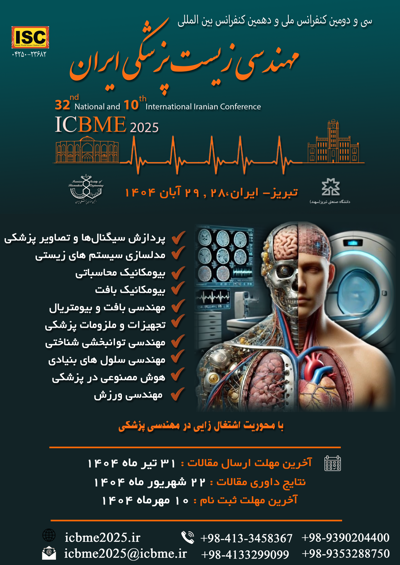
سی و دومین کنفرانس ملی و دهمین کنفرانس بین المللی مهندسی زیست پزشکی ایران
Improving Effectivity of repetitive Transcranial Magnetic Stimulation in Treatment of Amyotrophic Lateral Sclerosis by Designing New Protocol and Using Machine Learning
نویسندگان :
Ali Abedi
1
Gholamreza Moradi
2
Reza Sarraf Shirazi
3
Mehran Jahed
4
1- دانشگاه صنعتی امیرکبیر(پلی تکنیک تهران)
2- دانشگاه صنعتی امیرکبیر(پلی تکنیک تهران)
3- دانشگاه صنعتی امیرکبیر(پلی تکنیک تهران)
4- دانشگاه صنعتی شریف، تهران، ایران
کلمات کلیدی :
repetitive Transcranial Magnetic Stimulation (rTMS)،Machine Learning،Support Vector Machine (SVM)،Amyotrophic Lateral Sclerosis (ALS)،Electroencephalography (EEG)
چکیده :
Repetitive transcranial magnetic stimulation (rTMS) is an effective and old technique of neuromodulation of neuropsychiatric diseases, however patient responses are variable. Finding effective biomarkers that can predict the response to treatment is a critical step in maximizing the therapeutic efficacy. EEG-based features, when integrated with machine learning, provide a promising strategy to the analyze of response. In this work, we explore the effectiveness of EEG-derived features in identifying rTMS responders and non-responders by means of a Support Vector Machine (SVM) model. This study involved 34 ALS patients recruited from a neurology clinic, divided into two groups: 18 received the new rTMS protocol (NP) and 16 followed the Old protocol (OP). Resting-state EEG was acquired in patients before rTMS. Extracted features by using signal processing methods were: time domain (mean amplitude, variance), frequency domain (band power, peak alpha frequency), nonlinear tests (Hjorth parameters, fractal dimension, Hurst exponent). These features were input into SVM classifier. classification performance of SVM model is high, with overall accuracy of 97.3% when using BP combined with ZCR and FD. The ROC curve, showed excellent discrimination between responders and non-responders, with an AUC of 0.99, indicating the stability of the selected features for predicting treatment response. High classification accuracy suggests that machine learning-based EEG analysis might be promising to provide a personalized guideline for rTMS new therapy protocol.
لیست مقالات
لیست مقالات بایگانی شده
مروری بر کاربرد هوش مصنوعی در شبکه های اجتماعی، فرصتها و چالش ها
سیدمحمد بیدکی - رضا آذربان - فاطمه بشارتی
نظریه پایداری و ذینفعان: دیدگاه فرآیندی
رعنا شهداور - لیلا مهدیوند - مریم حسن پور
ارزیابی ساختار بازار حسابرسی در ایجاد ارزش افزوده اقتصادی در صنعت فولاد
کریم ستاری - محمدرضا عباسی استمال
The Influence of Insertion-Induced Prestress and Viscoelastic Properties in Fixational Stability of Pedicle Screws in UHWMPE block: A Finite Element Study
Ahmad Babazadeh Gh - Mohammadjavad (Matin) Einafshar - Ata Hashemi
Anastomosis Angle Effects in Beating-Heart Coronary Bypass Grafts: A Fluid–Structure Interaction Study
Mohammad Saleh Kazemi - Nasser Fatouraee - Aisa Rassoli
Dynamic Connectivity Reveals Transformative Power of Neurofeedback in Brain Functional Networks
Kasra Momeni - Gholam- Ali Hossein-Zadeh
Biomechanical Analysis of Blindfold Training for Backward Running in Handball Athletes
Aydin Najipour - Siamak Khorramymehr - Kamran Hassani
نقش هوش مصنوعی در شخصیسازی تجربه مشتری: بررسی رفتار مصرفکننده در فروشگاههای آنلاین
بهزاد بالازاده - حسین بوداقی - نازلی قراچورلو
Experimental Framework for Quantifying Muscle Force-Length Behavior in Dynamic Exercise
Erfan Farahani - Manizheh Zakeri - Mohammad-Reza Sayyed Noorani
بررسی رابطه بین کیفیت حسابرسی، تأمین مالی بدهی و مدیریت سود در مراحل مختلف چرخه عمر شرکتها
محدرضا پژوهی
بیشتر
19 اردیبهشت 1405
راهنمای انتخاب کنفرانس معتبر برای چاپ مقاله علمی
19 اردیبهشت 1405
چرا شرکت در کنفرانسهای علمی برای مصاحبه دکتری اهمیت دارد؟
21 اردیبهشت 1405
پذیرش سریع مقاله در کنفرانسهای علمی مهندسی و فناوری آغاز شد
21 اردیبهشت 1405
آغاز ثبتنام در همایشهای بینالمللی مدیریت و حسابداری
ثمین همایش، سامانه مدیریت کنفرانس ها و جشنواره ها - نگارش 44.7.0