لطفا منتظر بمانید ...
0% Complete
English
☰
صفحه اصلی
کنفرانسهای فعال
مدیریت منابع انسانی پایدار
حسابداری
بازاریابی و برندینگ در عصر هوش مصنوعی
هوش مصنوعی:نوآوری، کسبوکار و آموزش
ارشیو کنفرانسها
اولین کنفرانس ملی هوش مصنوعی
دومین کنفرانس ملی هوش مصنوعی
اولین کنگره ملی حسابداری، مالی و مالیاتی
32کنفرانس بین المللی زیست پزشکی
راهنمای شرکت
نحوه ثبتنام
ثبت نام مدیریت منابع انسانی پایدار
ثبت نام دومین کنگره ملی حسابداری
ثبت نام سومین کنفرانس ملی هوش مصنوعی
ثیت نام بازاریابی و برندینگ در عصر هوش مصنوعی
ثبت نام زنجیره ارزش نفت گاز و پتروشیمی
ارسال مقاله
فرمت مقالات مدیریت منابع انسانی پایدار
فرمت مقالات سیستم های هوشمند حسابداری
فرمت مقالات ملی بازاریابی و برندینگ در عصر هوش مصنوعی
فرمت مقالات سومین کنفرانس هوش مصنوعی
سوالات متداول
اخبار و رویدادها
درباره ما
تماس با ما
صفحه اصلی
/
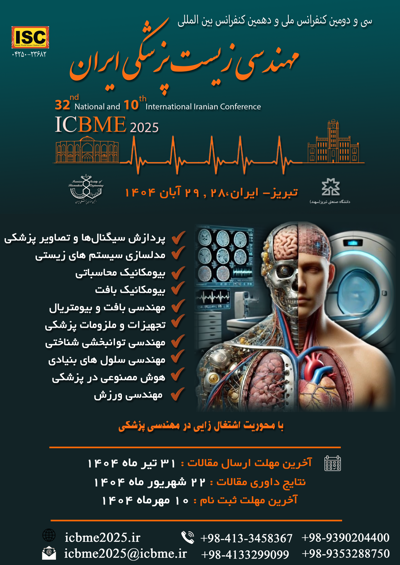
سی و دومین کنفرانس ملی و دهمین کنفرانس بین المللی مهندسی زیست پزشکی ایران
Lightweight 3D U-Net for Robust Liver Segmentation in Multi-Institutional CT Datasets
نویسندگان :
Seyyed Mohammad Hosseini
1
Faeze Salahshour
2
Ahmadreza Sebzari
3
Masoomeh Safaei
4
Hossein Ghadiri Harvani
5
1- دانشگاه علوم پزشکی تهران
2- دانشگاه علوم پزشکی تهران
3- دانشگاه علوم پزشکی بیرجند
4- دانشگاه علوم پزشکی تهران
5- دانشگاه علوم پزشکی تهران
کلمات کلیدی :
Liver،Segmentation،Computed Tomography (CT)،3D U-Net
چکیده :
A computed tomography (CT) image of the liver and surrounding structures provides detailed cross-sectional images, which highlight anatomical variations and pathological conditions. The combination of CT and U-Net networks is a well-known method for liver segmentation, which is vital for accurate diagnosis, treatment planning, and surgical intervention. However, the high computational demands of recent 3D U-Net–based architectures prevent their deployment in resource-constrained environments. A lightweight 3D U-Net optimized for liver segmentation is proposed in this study, maintaining high performance while reducing computational complexity drastically. Several institutional datasets of 250 abdominal CT volumes were compiled from public benchmarks (LiTS, IRCAD) and local clinical sources, encompassing anatomical, pathological, and protocol variations. An isotropic resampling procedure was used to resample, normalize intensity, standardize crops, and augment data on-the-fly. With fewer than two million parameters, the proposed model retains the encoder-decoder and skip-connection designs of conventional 3D U-Nets. An evaluation of a 30% independent set of tests achieved Dice similarity coefficients of 0.85 ± 0.02, intersect-over-unions of 0.82 ± 0.03, inference times under 0.7 s and GPU memory consumption below 2 GB. The performance was consistent across public and local datasets, highlighting the importance of heterogeneous training data. Even though the proposed model is slightly less accurate than heavy architecture, it delivers near-real-time segmentation with minimal resource consumption, so it can be integrated into clinical workflows, especially in environments where computational resources are limited.
لیست مقالات
لیست مقالات بایگانی شده
Topology Optimization for Optimal Design of Human Tibial Fixation Plates toward Improving Biomechanical Compatibility
Aida Ahmadi - Taha Goudarzi
Gravity-Directed Growth of ZnO Nanorods: Morphological Control via Chemical Bath Deposition
Masoud Ghashami - Melisa Daryayi - Mohammad Abdolahad
نقش حسابداری مدیریت در استراتژی فرهنگ سازمانی و مالیاتی
علی نمازیان - حمیدرضا فیروزآبادی
برنامهریزی قبل از عمل شلفاستابولوپلاستی، با هدف ایجاد یک مفصل کانگروئنت و بررسی ارتباط کانگروئیتی و جذب آلوگرافت
جعفر نصرآبادی - وحید اربابی - سعید رهنما
تأثیر استقلال و شایستگی حسابرس بر اثربخشی کنترلهای داخلی: بررسی نقش تعدیلی تجربه حسابرس
حیدر محمدزاده سالطه - سیما فرزانه خلیفه لو - زهره نوروزی مرادلو
هیدروژل ژل شونده آنزیمی بر پایه ژلاتین برای استفاده در کاربردهای مهندسی بافت
وحیده ابراهیمی بختور - علی برادر خوش فطرت - الهام دهقانی
Towards Accurate Multimodal Defformable Image Registration via Image Translation and Weak Supervision
Maryam Nasr - Mohammadreza Yazdchi - Mohsen Safdari
پیاده سازی مسیر یابی هوشمند بر اساس انرژی برای شبکه حسگر بی سیم
حمداله مهرآیین
تأثیر فعالیت های بازاریابی تجربی بر تجربه مشتری در متاورس: نقش واسطه ای سهولت درک شده و سودمندی درک شده و تأثیر آن بر عشق به برند
آیسان خضرلو - سید جعفر زنوزی
ارائه روشی جدید برای دستیابی به تعادل بار کاری پردازنده ها در محیط توزیع شده گرید محاسباتی با استفاده از الگوریتم ژنتیک
نجمه بلوردی - مریم حسینی گسمونی - فاطمه امامی پناه - مجده فخرآبادی
بیشتر
19 اردیبهشت 1405
راهنمای انتخاب کنفرانس معتبر برای چاپ مقاله علمی
19 اردیبهشت 1405
چرا شرکت در کنفرانسهای علمی برای مصاحبه دکتری اهمیت دارد؟
21 اردیبهشت 1405
پذیرش سریع مقاله در کنفرانسهای علمی مهندسی و فناوری آغاز شد
21 اردیبهشت 1405
آغاز ثبتنام در همایشهای بینالمللی مدیریت و حسابداری
ثمین همایش، سامانه مدیریت کنفرانس ها و جشنواره ها - نگارش 44.7.0