لطفا منتظر بمانید ...
0% Complete
English
☰
صفحه اصلی
کنفرانسهای فعال
مدیریت منابع انسانی پایدار
حسابداری
بازاریابی و برندینگ در عصر هوش مصنوعی
هوش مصنوعی:نوآوری، کسبوکار و آموزش
ارشیو کنفرانسها
اولین کنفرانس ملی هوش مصنوعی
دومین کنفرانس ملی هوش مصنوعی
اولین کنگره ملی حسابداری، مالی و مالیاتی
32کنفرانس بین المللی زیست پزشکی
راهنمای شرکت
نحوه ثبتنام
ثبت نام مدیریت منابع انسانی پایدار
ثبت نام دومین کنگره ملی حسابداری
ثبت نام سومین کنفرانس ملی هوش مصنوعی
ثیت نام بازاریابی و برندینگ در عصر هوش مصنوعی
ثبت نام زنجیره ارزش نفت گاز و پتروشیمی
ارسال مقاله
فرمت مقالات مدیریت منابع انسانی پایدار
فرمت مقالات سیستم های هوشمند حسابداری
فرمت مقالات ملی بازاریابی و برندینگ در عصر هوش مصنوعی
فرمت مقالات سومین کنفرانس هوش مصنوعی
سوالات متداول
اخبار و رویدادها
درباره ما
تماس با ما
صفحه اصلی
/
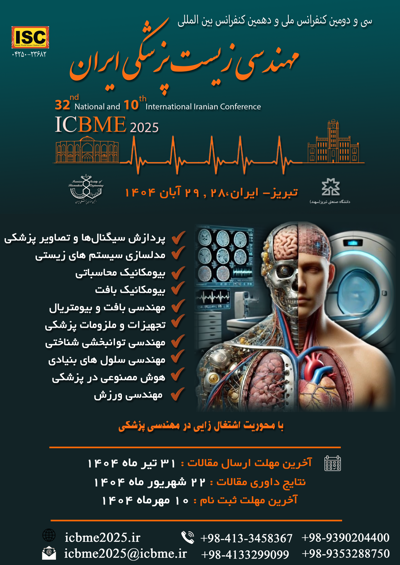
سی و دومین کنفرانس ملی و دهمین کنفرانس بین المللی مهندسی زیست پزشکی ایران
A Combined Time-Frequency and Common Spatial-Spectral Pattern Approach for EEG-Based Motor Imagery Classification
نویسندگان :
Reza Nejati
1
Hamed Danandeh Hesar
2
1- Sahand University of Technology
2- Sahand University of Technology
کلمات کلیدی :
Motor Imagery Tasks،Tunable-Q Wavelet Transform،Common Spatial-Spectral Patterns
چکیده :
Brain-Computer Interfaces (BCIs) are revolutionizing neurorehabilitation, providing crucial communication and control for individuals with severe motor impairments from conditions like ALS, spinal cord injuries, or stroke. By creating direct links between brain activity and external devices, BCIs bypass damaged neural pathways, thus restoring motor function and significantly enhancing quality of life. Electroencephalography (EEG) is a favored BCI modality due to its accessibility and cost-effectiveness. However, a major challenge lies in the substantial impact of cognitive and individual differences on motor imagery (MI) task performance and overall BCI accuracy. This research introduces a novel method to overcome these challenges, focusing on enhanced MI classification. Our approach synergistically integrates Common Spatial-Spectral Pattern (CSSP) filters with the Tunable-Q Wavelet Transform (TQWT). This powerful combination was applied to the extensive CHO-2017 database (52 participants), which uniquely captures significant inter-individual cognitive variations, specifically to distinguish between left and right-hand MI tasks. A critical aspect of our method is the utilization of only the top 10 most discriminative features extracted through this hybrid technique. This deliberate streamlining maximizes classification efficacy while maintaining computational efficiency. This tailored feature set demonstrated remarkable effectiveness, performing across 99% of participants. When integrated with a K-Nearest Neighbors (KNN) classifier, this approach achieved an outstanding accuracy of 98.84%, notably surpassing existing state-of-the-art methods in the field. These findings hold significant promise for developing more accurate and robust BCI systems capable of extracting optimal commands for diverse MI applications, ultimately advancing neurorehabilitation outcomes.
لیست مقالات
لیست مقالات بایگانی شده
سامانه هوشمند مبتنی بر بینایی ماشین برای تشخیص افتادن سالمندان: رویکردی ایمن، دقیق و سریع
سیدحسن نوری - هدی محمدزاده
سنجش میزان رضایت مشتریان بانک ملی شهرستان تنکابن با استفاده از مدل MCPDA
محمد اخشابی
مدیریت منابع انسانی با رویکرد هوش مصنوعی: مدیریت هوشمند داده محور
محمدرضا دلوی - مصطفی طغیانی پزوه
تاثیر مولفه های هوش معنوی بر قضاوت حرفه ای حسابرسان
علیرضا عظیمی ثانی
تحلیل نقش هوش مصنوعی در تحول بازرگانی و مدیریت زنجیره تأمین: مطالعهی موردی گروه صنعتی مپنا
حسین بوذری
حسابداری سبز
لیلا کاتب - مبینا قدسی - ثنا کامکار
Using Advanced Ensemble Machine Learning Models to Predict Traffic in SDN-Based Networks: A Comparative Study of Bagging, Boosting, and Stacking Approaches
Raha Pakzad - Sasan GharaPasha - Nasrin Firouz - Ramin Habibzadehsharif
تأثیر استقلال و شایستگی حسابرس بر اثربخشی کنترلهای داخلی: بررسی نقش تعدیلی تجربه حسابرس
حیدر محمدزاده سالطه - سیما فرزانه خلیفه لو - زهره نوروزی مرادلو
Effect of ph changes on thermal and mechanical properties of polyacrylamide hydrogel using molecular dynamics simulation
Narges Karimzadeh Dehkordi
چالشها و فرصتهای نگارش و فرایند داوری مقالات با هوش مصنوعی
مرضیه باباشپور اصل
بیشتر
19 اردیبهشت 1405
راهنمای انتخاب کنفرانس معتبر برای چاپ مقاله علمی
19 اردیبهشت 1405
چرا شرکت در کنفرانسهای علمی برای مصاحبه دکتری اهمیت دارد؟
21 اردیبهشت 1405
پذیرش سریع مقاله در کنفرانسهای علمی مهندسی و فناوری آغاز شد
21 اردیبهشت 1405
آغاز ثبتنام در همایشهای بینالمللی مدیریت و حسابداری
ثمین همایش، سامانه مدیریت کنفرانس ها و جشنواره ها - نگارش 44.7.0