لطفا منتظر بمانید ...
0% Complete
English
☰
صفحه اصلی
کنفرانسهای فعال
مدیریت منابع انسانی پایدار
حسابداری
بازاریابی و برندینگ در عصر هوش مصنوعی
هوش مصنوعی:نوآوری، کسبوکار و آموزش
ارشیو کنفرانسها
اولین کنفرانس ملی هوش مصنوعی
دومین کنفرانس ملی هوش مصنوعی
اولین کنگره ملی حسابداری، مالی و مالیاتی
32کنفرانس بین المللی زیست پزشکی
راهنمای شرکت
نحوه ثبتنام
ثبت نام مدیریت منابع انسانی پایدار
ثبت نام دومین کنگره ملی حسابداری
ثبت نام سومین کنفرانس ملی هوش مصنوعی
ثیت نام بازاریابی و برندینگ در عصر هوش مصنوعی
ثبت نام زنجیره ارزش نفت گاز و پتروشیمی
ارسال مقاله
فرمت مقالات مدیریت منابع انسانی پایدار
فرمت مقالات سیستم های هوشمند حسابداری
فرمت مقالات ملی بازاریابی و برندینگ در عصر هوش مصنوعی
فرمت مقالات سومین کنفرانس هوش مصنوعی
سوالات متداول
اخبار و رویدادها
درباره ما
تماس با ما
صفحه اصلی
/
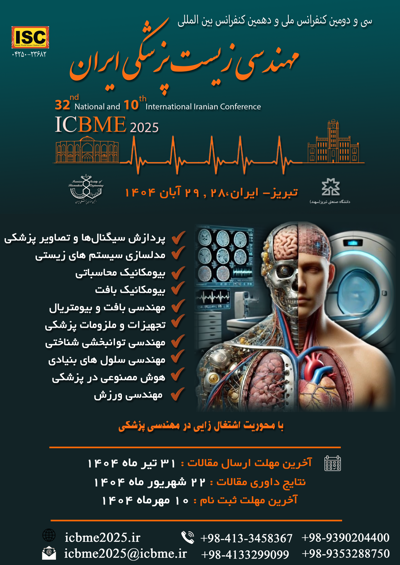
سی و دومین کنفرانس ملی و دهمین کنفرانس بین المللی مهندسی زیست پزشکی ایران
How Geometric Asymmetry Impacts Aortic Valve Bioprosthesis Performance – A Finite Element Analysis
نویسندگان :
Reyhaneh Mosaferchi
1
Nasser Fatouraee
2
1- دانشکده مهندسی پزشکی، دانشگاه صنعتی امیرکبیر (پلیتکنیک تهران)، تهران، ایران
2- دانشکده مهندسی پزشکی، دانشگاه صنعتی امیرکبیر (پلیتکنیک تهران)، تهران، ایران
کلمات کلیدی :
Asymmetric aortic valve،Geometric orifice area،Coaptation area،Parametric design،Grasshopper،Regurgitation،Prosthetic valve design،Valve dynamics
چکیده :
A finite element analysis (FEA) was performed to compare the biomechanical performance of twelve asymmetric aortic valve designs against a symmetric reference, all sharing identical radius and height for geometric consistency. Using Grasshopper for parametric modeling, the study evaluated two key parameters: geometric orifice area (GOA), which affects flow during valve opening, and coaptation area (CA), which impacts sealing during closure. These were tested under simulated physiological conditions to assess the effects of asymmetry. Results showed significant differences in GOA and CA between asymmetric and symmetric designs, highlighting the role of asymmetry in valve opening and closing dynamics. The study identified valve asymmetry ranges (Area Diff % between -6.215 and 22.935) linked to improved performance, offering practical insights for optimizing aortic valve designs. Natural aortic valves, which serve as the benchmark for optimal performance, exhibit inherent asymmetry, with studies showing that one of the three leaflets typically displays statistically significant differences compared to the other two, which have minimal variation. These findings underscore the importance of mimicking such asymmetry in prosthetic valves to enhance efficiency. This analysis provides valuable guidance for advancing prosthetic valve design in clinical and engineering contexts.
لیست مقالات
لیست مقالات بایگانی شده
Optimal Control and Emergence of Kinematic Synergies in Underactuated Biped Locomotion
Mahdi Alipoor - Masoud Yousefi - Farzam Farahmand
طراحی ربات نرم پوشیدنی مچ پا با کنترل پیشبین مدل برای توانبخشی پس از سکته
امیرحسین اختراعی طوسی - یگانه خراشادی زاده
Machine Learning and Deep Learning Approaches for Fake News Detection: A Comprehensive Survey
Arian Hajati - Azita Shirazipour - Seyed Javad Mirabedini
BiLSTM-Transformer: A Novel Hybrid Model for Accurate Prediction of Hand Joint Angles from sEMG Signals
Anita Sadat Sadati Rostami - Alireza Nazari - Mohammadreza Nayeri
A Combined Time-Frequency and Common Spatial-Spectral Pattern Approach for EEG-Based Motor Imagery Classification
Reza Nejati - Hamed Danandeh Hesar
طراحی مدل توزیع ناب - کلاس جهانی در صنعت برق ایران
رکسانا رادمنشی
هوش مصنوعی و مفاهیم مالی و حسابداری با تاکید برحاکمیت شرکتی
مهدی زینالی - رعنا کمالی
بررسی آمارههای توصیفی فواصل بین ژنی ژنوم و پاتوژنی در دو سویه K12 و O157:H7 باکتری E. Coli با رویکرد بیوانفورماتیکی
علی دژبرد - مرتضی علیزاده - محمد حاجی تبار - رحمان خدادادی گله
مروری سیستماتیک بر کاربرد هوش مصنوعی در تشخیص تهدیدات سایبری در زنجیره تأمین رایانش ابری
اسماعیل قاسمی - شاهین سمیع عادل
Recovery of Hand Motor Function in Children with Hemiparetic Cerebral Palsy using an Interactive Computer Game Combined with Mechanoreceptor Stimulation: A Pilot Study
Mobina Ramezani - Shahed Salehzehi - Parisa Hosseini - Zahra Alizadeh Sarborj - Ghazal Mohammadzadeh - Hamid Reza Kobravi - Narges Hashemi - Mehran Beiraghi Toosi - Javad Akhondian
بیشتر
19 اردیبهشت 1405
راهنمای انتخاب کنفرانس معتبر برای چاپ مقاله علمی
19 اردیبهشت 1405
چرا شرکت در کنفرانسهای علمی برای مصاحبه دکتری اهمیت دارد؟
21 اردیبهشت 1405
پذیرش سریع مقاله در کنفرانسهای علمی مهندسی و فناوری آغاز شد
21 اردیبهشت 1405
آغاز ثبتنام در همایشهای بینالمللی مدیریت و حسابداری
ثمین همایش، سامانه مدیریت کنفرانس ها و جشنواره ها - نگارش 44.7.0