لطفا منتظر بمانید ...
0% Complete
English
☰
صفحه اصلی
کنفرانسهای فعال
مدیریت منابع انسانی پایدار
حسابداری
بازاریابی و برندینگ در عصر هوش مصنوعی
هوش مصنوعی:نوآوری، کسبوکار و آموزش
ارشیو کنفرانسها
اولین کنفرانس ملی هوش مصنوعی
دومین کنفرانس ملی هوش مصنوعی
اولین کنگره ملی حسابداری، مالی و مالیاتی
32کنفرانس بین المللی زیست پزشکی
راهنمای شرکت
نحوه ثبتنام
ثبت نام مدیریت منابع انسانی پایدار
ثبت نام دومین کنگره ملی حسابداری
ثبت نام سومین کنفرانس ملی هوش مصنوعی
ثیت نام بازاریابی و برندینگ در عصر هوش مصنوعی
ثبت نام زنجیره ارزش نفت گاز و پتروشیمی
ارسال مقاله
فرمت مقالات مدیریت منابع انسانی پایدار
فرمت مقالات سیستم های هوشمند حسابداری
فرمت مقالات ملی بازاریابی و برندینگ در عصر هوش مصنوعی
فرمت مقالات سومین کنفرانس هوش مصنوعی
سوالات متداول
اخبار و رویدادها
درباره ما
تماس با ما
صفحه اصلی
/
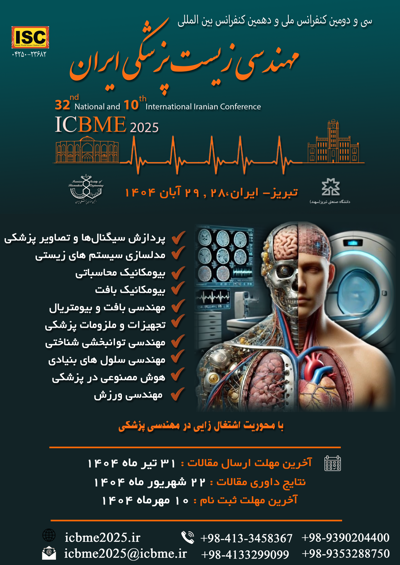
سی و دومین کنفرانس ملی و دهمین کنفرانس بین المللی مهندسی زیست پزشکی ایران
Goniometry and Electromyography Data Analysis for Knee Health Diagnosis using Machine Learning
نویسندگان :
Mohammad-Reza Sayyed Noorani
1
Zahra Mahmoudi Anzabi
2
Sara Sharifi
3
1- University of Tabriz
2- University of Tabriz
3- University of Tabriz
کلمات کلیدی :
Knee Health Diagnosis،Machine Learning،Feature Extraction،Goniometry،Surface Electromyography
چکیده :
In this study, we employed the Sánchez dataset [1] comprising synchronized knee goniometric measurements and surface electromyography (sEMG) recordings from major knee flexor and extensor muscles to develop a machine learning-based classification system for knee joint health assessment. The dataset included biomechanical data from 11 healthy controls and 11 participants with diagnosed knee pathologies. Our analysis focused only on the data collected during walking trials. Accordingly, training data prepared through kinematic monitoring of knee joint angles and subsequent segmentation of complete gait cycles - from initial heel-strike through terminal swing phase. Thus, we compiled 48 datasets from healthy controls and 173 datasets from participants with knee abnormalities. Each dataset included synchronized sEMG signals from four major muscles (rectus femoris, biceps femoris long head, vastus medialis, and semitendinosus) along with knee goniometry data, all of them were captured through complete gait cycles. Here, various combinations of statistical, temporal, and wavelet features using SVM, LDA, and KNN classifiers for knee health assessment were evaluated. Goniometric data alone achieved the best index with 97.7% accuracy (LDA/SVM models) when incorporating at least one feature from each type. For sEMG signal combinations, optimal performance (93.8% accuracy with LDA) was obtained using solely semitendinosus muscle data with complete feature sets. Comparative analysis revealed wavelet features as the least effective individually, while combined feature sets consistently yielded superior results. The sEMG signals from other individual muscles or their various combinations, regardless of feature selection approach, consistently demonstrated inferior classification performance.
لیست مقالات
لیست مقالات بایگانی شده
Multi-Level Driver Fatigue Detection Using EEG Signals with CNN–LSTM Models in a Compressed Sensing Framework
Sobhan Sheykhivand - Nastaran Khaleghi
.Deep Learning-based Segmentation of Human Sperm Heads using YOLOv8 and SAM
Hadis Aligoo Zanjany - Maryam Pashaiasl - Ata Jodeiri
حسابداری سبز
لیلا کاتب - مبینا قدسی - ثنا کامکار
مروری بر کاربردهای هوش مصنوعی درصنعت
امیرپاشا گرگان نژاد - لاریسا خدادادی
خطرات احتمالی در طراحی و تجزیه و تحلیل سیستمهای حسابداری و راهکارهای مقابله با آن
علی نمازیان - آرزو رضایی حومدینی
Investigating the impact of arm swing on lower limb forces using machine learning techniques
Mohammad Reza Seidgar - Hadi Farahani - Mostafa Rostami - Elham Naziri - Sadegh Madadi
ارزیابی ریسک ملی و فراملی ( ریسک غیر مالی) (مطالعه موردی درکرواسی)
شبنم بالازاده قره باغی - فرهاد خداکرمی - امیرحسین باقری - مهتاب رنجبران
کاربرد هوش مصنوعی در ایجاد و توسعه شبکه های صنعتی
بهاره رضاپور - حسین بوداقی خواجه نوبر
هزینه یابی بر اساس فعالیت(ABC) و پیامد های آن برای نو آوری باز
دکتر مهدی زینالی - رضا عباس زاده کر
طبقه بندی دقیق تومورهای مغزی با رویکرد ترکیبی EfficientNetB4 و ترنسفورمر بینایی
الهه الهی پرست باقری - افشین ابراهیمی
بیشتر
19 اردیبهشت 1405
راهنمای انتخاب کنفرانس معتبر برای چاپ مقاله علمی
19 اردیبهشت 1405
چرا شرکت در کنفرانسهای علمی برای مصاحبه دکتری اهمیت دارد؟
21 اردیبهشت 1405
پذیرش سریع مقاله در کنفرانسهای علمی مهندسی و فناوری آغاز شد
21 اردیبهشت 1405
آغاز ثبتنام در همایشهای بینالمللی مدیریت و حسابداری
ثمین همایش، سامانه مدیریت کنفرانس ها و جشنواره ها - نگارش 44.7.0