لطفا منتظر بمانید ...
0% Complete
English
☰
صفحه اصلی
کنفرانسهای فعال
مدیریت منابع انسانی پایدار
حسابداری
بازاریابی و برندینگ در عصر هوش مصنوعی
هوش مصنوعی:نوآوری، کسبوکار و آموزش
ارشیو کنفرانسها
اولین کنفرانس ملی هوش مصنوعی
دومین کنفرانس ملی هوش مصنوعی
اولین کنگره ملی حسابداری، مالی و مالیاتی
32کنفرانس بین المللی زیست پزشکی
راهنمای شرکت
نحوه ثبتنام
ثبت نام مدیریت منابع انسانی پایدار
ثبت نام دومین کنگره ملی حسابداری
ثبت نام سومین کنفرانس ملی هوش مصنوعی
ثیت نام بازاریابی و برندینگ در عصر هوش مصنوعی
ثبت نام زنجیره ارزش نفت گاز و پتروشیمی
ارسال مقاله
فرمت مقالات مدیریت منابع انسانی پایدار
فرمت مقالات سیستم های هوشمند حسابداری
فرمت مقالات ملی بازاریابی و برندینگ در عصر هوش مصنوعی
فرمت مقالات سومین کنفرانس هوش مصنوعی
سوالات متداول
اخبار و رویدادها
درباره ما
تماس با ما
صفحه اصلی
/
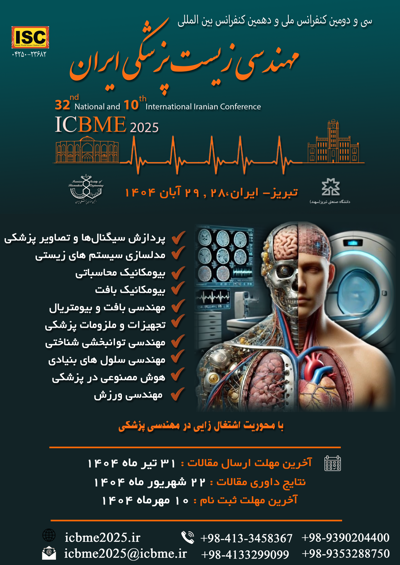
سی و دومین کنفرانس ملی و دهمین کنفرانس بین المللی مهندسی زیست پزشکی ایران
Emotion Recognition from EEG signal using GA-FLANN with Whale Optimization Algorithm
نویسندگان :
Mohammadamir Razmi
1
Pouya Faridfar
2
Seyed Amirreza Navali Hosseini alavi
3
1- Department of Aerospace Engineering, Science and Research branch, Islamic Azad University, Tehran, Iran
2- Department of computer Engineering Mashhad branch, Islamic Azad University Mashhad, Iran
3- Department of computer Engineering Mashhad branch, Islamic Azad University Mashhad, Iran
کلمات کلیدی :
EEG signal،Emotion recognition،GA-FLANN Classification،Whale Optimization Algorithm (WOA)
چکیده :
Non-verbal cues—such as intentions and emotions—are central to human communication. Electroencephalogram (EEG) signals, which record the brain’s electrical activity, offer a direct and culture-independent basis for emotion recognition. We propose a compact and efficient pipeline that uses the Whale Optimization Algorithm (WOA) as a wrapper-based feature selector and a Genetic-Algorithm-trained Functional Link Artificial Neural Network (GA-FLANN) as the classifier. EEG signals are band-pass filtered (4–40 Hz), segmented, and transformed into spectral and connectivity descriptors; WOA searches for an optimal sparse subset of discriminative features that maximizes classification performance, while GA-FLANN performs the final emotion classification. Experiments were conducted on the SJTU Emotion EEG Dataset (SEED) comprising 15 subjects, each with 64 EEG channels sampled at 1000 Hz, and involving three emotion classes (positive, neutral, negative), with comparisons against radial basis function (RBF) and Improved Self-Organizing FLANN (ISO-FLANN) baselines. On SEED, the proposed WOA–GA-FLANN achieves 98.73% accuracy and 98.13% macro-F1, improving over radial basis function (RBF) and Improved Self-Organizing FLANN (ISO-FLANN) by approximately +4.7% and +3.9%, respectively.
لیست مقالات
لیست مقالات بایگانی شده
مروری بر توسعه نرمافزار برای دستگاههای اینترنت اشیا
سجاد یوسفی - مریم پورنجف - ایدا اسدی
Finite Element Analysis of Polyoxymethylene Hemostatic Clips: Stress Distribution and Hinge Geometry Optimization
Parastoo Kamali - Hadi Taghizadeh
Backward Walking Under Dual-Task Conditions Among Young Adults: A Potential Tool for Early Detection of Gait Instability and Fall Risk
Zahra Ouni - Hassan Khoudeh - Mina Niknam - Fariborz Rahimi
Modeling Attention Performance Across Female Reproductive Aging Using Logistic Regression
Zahra Zehtabi - Leila Mehdizadeh Fanid - Pedram Salehpoor - Mahdi Jafari Asl
چارچوب سلسلهمراتبی مبتنی بر مدل انتشار شرطی و شبکه پیشبینیکننده برای تولید و بازشناسی توامان حالات چهره
علی محمدپزنده - عمادالدین فاطمیزاده
تحلیل روند پژوهشهای علمی پیرامون الگوریتم بهینهسازی کلونی مورچگان چندهدفه
ملیحه نیک سیرت - محسن صفاریان
بررسی مربوط بودن ارزش اطلاعات حسابداری با استفاده از روش CART: یک مطالعه برای شرکتهای داروسازی در بورس اوراق بهادار تهران
نوراله خدادادی - مهرداد قنبری - بابک جمشیدی نوید - جواد مسعودی
Structural Insights into the Molecular Mechanism of Cancer Regulator BRCA1 Methylation
Shadi Asadi - Maryam Azimzadeh Irani
Ultimate Failure Load of Plate-Based Fixation and a Suture Anchor for Rotator Cuff Repair Across Polyurethane Bone Densities
Parviz Ahangar - Solmaz Mojadam Mofrad - Amir Nourani - Amirhasan Amini - Erfan Ahmadpour Joeini - Mohammad nasir Naderi
تاثیر مولفه های هوش معنوی بر قضاوت حرفه ای حسابرسان
علیرضا عظیمی ثانی
بیشتر
19 اردیبهشت 1405
راهنمای انتخاب کنفرانس معتبر برای چاپ مقاله علمی
19 اردیبهشت 1405
چرا شرکت در کنفرانسهای علمی برای مصاحبه دکتری اهمیت دارد؟
21 اردیبهشت 1405
پذیرش سریع مقاله در کنفرانسهای علمی مهندسی و فناوری آغاز شد
21 اردیبهشت 1405
آغاز ثبتنام در همایشهای بینالمللی مدیریت و حسابداری
ثمین همایش، سامانه مدیریت کنفرانس ها و جشنواره ها - نگارش 44.7.0