لطفا منتظر بمانید ...
0% Complete
English
☰
صفحه اصلی
کنفرانسهای فعال
مدیریت منابع انسانی پایدار
حسابداری
بازاریابی و برندینگ در عصر هوش مصنوعی
هوش مصنوعی:نوآوری، کسبوکار و آموزش
ارشیو کنفرانسها
اولین کنفرانس ملی هوش مصنوعی
دومین کنفرانس ملی هوش مصنوعی
اولین کنگره ملی حسابداری، مالی و مالیاتی
32کنفرانس بین المللی زیست پزشکی
راهنمای شرکت
نحوه ثبتنام
ثبت نام مدیریت منابع انسانی پایدار
ثبت نام دومین کنگره ملی حسابداری
ثبت نام سومین کنفرانس ملی هوش مصنوعی
ثیت نام بازاریابی و برندینگ در عصر هوش مصنوعی
ثبت نام زنجیره ارزش نفت گاز و پتروشیمی
ارسال مقاله
فرمت مقالات مدیریت منابع انسانی پایدار
فرمت مقالات سیستم های هوشمند حسابداری
فرمت مقالات ملی بازاریابی و برندینگ در عصر هوش مصنوعی
فرمت مقالات سومین کنفرانس هوش مصنوعی
سوالات متداول
اخبار و رویدادها
درباره ما
تماس با ما
صفحه اصلی
/
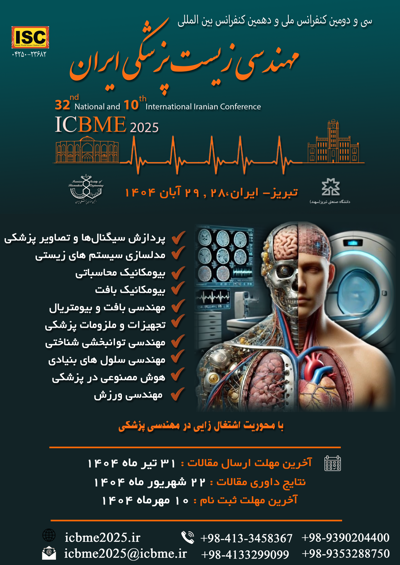
سی و دومین کنفرانس ملی و دهمین کنفرانس بین المللی مهندسی زیست پزشکی ایران
Patient-Specific TMJ Implants: A Finite Element Study on Placement and Material Effects
نویسندگان :
Aryana Tavakoulnia
1
Mohadese Rajaeirad
2
Nima Jamshidi
3
Sandipan Roy
4
1- University of Isfahan
2- University of Isfahan
3- University of Isfahan
4- SRM institute of technology
کلمات کلیدی :
Temporomandibular Joint،Finite Element Analysis،Patient-Specific Prosthesis،Stress Distribution،PEEK،Titanium
چکیده :
The clinical success and long-term durability of total temporomandibular joint (TMJ) prostheses are directly dependent on mechanical stability and the pattern of biomechanical force distribution between the prosthesis and the host bone. Factors such as precise implant positioning and the mechanical properties of the prosthesis material play a critical role in its performance. This computational study aims to quantitatively and comparatively investigate the effect of the prosthesis's positioning and material on stress distribution and mechanical stability using the finite element method. A 3D model of a patient's mandible was reconstructed from high-resolution CT scans, and a patient-specific total joint prosthesis was designed. Two materials were considered: Titanium alloy (Ti-6Al-4V) and Polyetheretherketone (PEEK). For each material, three positioning scenarios were defined: (1) an ideal anatomical reference position, (2) a 2 mm lateral displacement, and (3) a 3 mm medial displacement. The bone-prosthesis assemblies were analyzed in Abaqus under a static chewing load of 262.28 N. The results showed that prosthesis positioning significantly impacts the stress distribution pattern. For the titanium model, the lateral position was identified as biomechanically optimal, as it best protected the host bone from excessive loading while ensuring maximum structural stability. A comparison of materials revealed that while titanium prostheses offer greater stability (less displacement), PEEK prostheses, due to an elastic modulus closer to that of bone, reduce the stress shielding phenomenon and lead to a more physiological load distribution on the bone. The final choice of material depends on prioritizing maximum stability versus the long-term health of the host bone.
لیست مقالات
لیست مقالات بایگانی شده
بررسی تأثیر ابزارهای خلاق مبتنی بر هوش مصنوعی بر ایدهپردازی دانشجویان
ندا پرتونیا
نقش هوش مصنوعی در تحول تجارت الکترونیک: مروری بر روشها و چالشها
الهام آزادی مرند
Lightweight 3D U-Net for Robust Liver Segmentation in Multi-Institutional CT Datasets
Seyyed Mohammad Hosseini - Faeze Salahshour - Ahmadreza Sebzari - Masoomeh Safaei - Hossein Ghadiri Harvani
Improving Effectivity of repetitive Transcranial Magnetic Stimulation in Treatment of Amyotrophic Lateral Sclerosis by Designing New Protocol and Using Machine Learning
Ali Abedi - Gholamreza Moradi - Reza Sarraf Shirazi - Mehran Jahed
EEG Graph Construction: A Comparative Analysis for Classification Application
Kiana Kalantari - Mohammad Bagher Shamsollahi
Multi-Objective Optimization of the Impeller of a mini Blood Pump: Balancing Outlet Pressure and Scalar Shear Stress
Reza Sahebi-Kuzeh kanan - Hanieh Niroomand-oscuii - Habib Badri Ghavifekr - Farzan Ghalichi
Robust Glucose Level Classification from NIR-Based PPG Using Morphological Features
Arian Mesforoosh Mashhad - Yeganeh Binafar - Mohammad Reza Akbarzadeh Totonchi
توسعه پیشرفته بازیهای ویدیویی با بهرهگیری از هوش مصنوعی و مدلهای زبانی بزرگ: از چارچوبهای چندعاملی تا بصریسازی هوشمند
سجاد یوسفی - مریم پورنجف - نیلوفر منفردنژاد
هیدروژل های طبیعی مبتنی بر زیستمواد برای بهبود زخم: طراحی، پیشرفتهای اخیر و دیدگاههای مهندسی بافت
محمد عرب چم چنگی - میلاد زارع - سولماز خلیق فرد
بررسی ابزارهای حسابداری در بازار ارزهای دیجیتال و شبکه بلاکچین
میلاد هاشم زاده
بیشتر
19 اردیبهشت 1405
راهنمای انتخاب کنفرانس معتبر برای چاپ مقاله علمی
19 اردیبهشت 1405
چرا شرکت در کنفرانسهای علمی برای مصاحبه دکتری اهمیت دارد؟
21 اردیبهشت 1405
پذیرش سریع مقاله در کنفرانسهای علمی مهندسی و فناوری آغاز شد
21 اردیبهشت 1405
آغاز ثبتنام در همایشهای بینالمللی مدیریت و حسابداری
ثمین همایش، سامانه مدیریت کنفرانس ها و جشنواره ها - نگارش 44.7.0