لطفا منتظر بمانید ...
0% Complete
English
☰
صفحه اصلی
کنفرانسهای فعال
مدیریت منابع انسانی پایدار
حسابداری
بازاریابی و برندینگ در عصر هوش مصنوعی
هوش مصنوعی:نوآوری، کسبوکار و آموزش
ارشیو کنفرانسها
اولین کنفرانس ملی هوش مصنوعی
دومین کنفرانس ملی هوش مصنوعی
اولین کنگره ملی حسابداری، مالی و مالیاتی
32کنفرانس بین المللی زیست پزشکی
راهنمای شرکت
نحوه ثبتنام
ثبت نام مدیریت منابع انسانی پایدار
ثبت نام دومین کنگره ملی حسابداری
ثبت نام سومین کنفرانس ملی هوش مصنوعی
ثیت نام بازاریابی و برندینگ در عصر هوش مصنوعی
ثبت نام زنجیره ارزش نفت گاز و پتروشیمی
ارسال مقاله
فرمت مقالات مدیریت منابع انسانی پایدار
فرمت مقالات سیستم های هوشمند حسابداری
فرمت مقالات ملی بازاریابی و برندینگ در عصر هوش مصنوعی
فرمت مقالات سومین کنفرانس هوش مصنوعی
سوالات متداول
اخبار و رویدادها
درباره ما
تماس با ما
صفحه اصلی
/
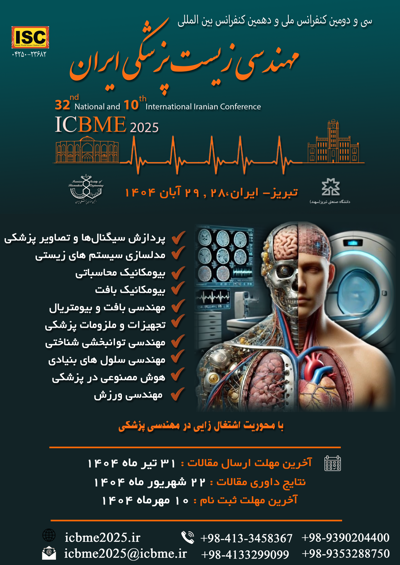
سی و دومین کنفرانس ملی و دهمین کنفرانس بین المللی مهندسی زیست پزشکی ایران
Effects of laminectomy on active-passive spine loads: a musculoskeletal finite element modeling investigation
نویسندگان :
Aida Ahmadi
1
Navid Arjmand
2
Parisa Azimi
3
1- Sharif University of Technology
2- Sharif University of Technology
3- Alborz University of Medical Sciences
کلمات کلیدی :
Lumbar spinal stenosis،Spinal surgery،Laminectomy،Finite element modeling،Spinal load distribution
چکیده :
Lumbar spine pain and disorders, including stenosis, are significant causes of disability, particularly among the elderly. often leading to surgical interventions such as laminectomy with or without facetectomy. It involves the removal of the lamina, spinous process, posterior ligaments, and, in some cases, facet joints, thereby disrupting the normal load-sharing among active and passive spine elements. In the absence of viable in vivo approaches, advanced computational modeling offers insights into the biomechanical mechanisms underlying postoperative complications. This study investigates the biomechanical effects of three surgical procedures, i.e., unilateral laminectomy, full laminectomy, and laminectomy with facetectomy, on active-passive spine load distributions using our validated musculoskeletal–finite element (MS–FE) model. The analysis focuses on preoperative (intact condition) and postoperative simulations of the L4–L5 motion segment during static upright standing posture and forward trunk flexion at 80° (deep flexion). Results show that in the upright standing, negligible differences were observed between intact and postoperative models since ligaments were not tensioned. In contrast, deep flexion induced substantial changes across surgical procedures. Total muscle force increased from 1730 N in the intact model to 1893 N, 2019 N, and 2019 N after unilateral laminectomy, full laminectomy, and laminectomy with facetectomy. Joint compression at L4–L5 increased from 1724 N to 1860 N, 2118 N, and 2118 N across the three procedures. Ligament forces decreased dramatically at L3–L4 and L4–L5 (e.g., 404 N to 12 N, and 399 N to 66 N, respectively) after full laminectomy and facetectomy. Surgical resection of posterior elements had the most pronounced effects on joint compression, ligament forces, and total muscle forces, particularly during deep flexion. Full laminectomy and facetectomy caused greater biomechanical alterations compared to unilateral laminectomy, which led to relatively smaller changes. Unilateral laminectomy should therefore be the preferred approach whenever sufficient decompression can be achieved, especially in cases with unilateral lateral recess stenosis, foraminal stenosis, or focal disc herniation without bilateral symptoms. Understanding these biomechanical changes is essential for optimizing surgical planning, minimizing anatomical disruption, and reducing the risk of postoperative complications.
لیست مقالات
لیست مقالات بایگانی شده
Phase-Specific Analysis of Arm–Leg Load Sharing in Exoskeleton-Assisted Gait Using Biomechanical Indices
Milad Hosseini - Negin Nasirian - Saeed Behzadipour
Effective Connectivity Alterations within the Cortico–Basal Ganglia Circuit Associated with Motor Skill Learning
Mohammad Rezaei - Alireza Talesh Jafadideh - Fariba Bahrami - Shahzad Tahmasebi Boroujeni
تاثیر داراییهای نامشهود بر ارزش بازار شرکت؛ مطالعه موردی شرکت های صنایع شیمیایی بورس اوراق بهادار تهران
محمدرضا پژوهی
Benchmarking Class Activation Map Methods for Explainable Brain Hemorrhage Classification on Hemorica Dataset
Zahra Rafati - Mohamad Hoseyni - Javad Khoramdel - Amirhossein Nikoofard
رویکردهای مبتنی بر هوش مصنوعی برای تشخیص تقلب مالی
مهدیه نامی بسیط - شبنم بالازاده قره باغی - مهدی نامی بسیط
بررسی کاربرد تکنیک های هوش مصنوعی در سیستم های توصیه گر
آسیه یاوری - علی اکبر نقابی
مروری بر سیر تحول نظری برنامهریزی منطقهای مبتنی بر زنجیره ارزش با تاکید بر صنایع نساجی و پوشاک
محسن رفیعیان - شبنم جعفری
Electrochemical Biosensors Based on Polyaniline Nanostructures: An Analysis of Advances, Performance Challenges, and the Outlook for Smart Systems
Nasim Kharazminezhad - Ramez Pourahmad
بررسی جامع تکنیک های مستندسازی هوش مصنوعی در کسب و کار
سعید انور خطیبی
تاثیر هوش مصنوعی و فناوری های نوین بر بهبود بودجهبندی دولتی و کنترل مالی
مهدی زینالی - بهزاد محمودی - سمیه علیمرادی اشقلو
بیشتر
19 اردیبهشت 1405
راهنمای انتخاب کنفرانس معتبر برای چاپ مقاله علمی
19 اردیبهشت 1405
چرا شرکت در کنفرانسهای علمی برای مصاحبه دکتری اهمیت دارد؟
21 اردیبهشت 1405
پذیرش سریع مقاله در کنفرانسهای علمی مهندسی و فناوری آغاز شد
21 اردیبهشت 1405
آغاز ثبتنام در همایشهای بینالمللی مدیریت و حسابداری
ثمین همایش، سامانه مدیریت کنفرانس ها و جشنواره ها - نگارش 44.7.0