لطفا منتظر بمانید ...
0% Complete
English
☰
صفحه اصلی
کنفرانسهای فعال
مدیریت منابع انسانی پایدار
حسابداری
بازاریابی و برندینگ در عصر هوش مصنوعی
هوش مصنوعی:نوآوری، کسبوکار و آموزش
ارشیو کنفرانسها
اولین کنفرانس ملی هوش مصنوعی
دومین کنفرانس ملی هوش مصنوعی
اولین کنگره ملی حسابداری، مالی و مالیاتی
32کنفرانس بین المللی زیست پزشکی
راهنمای شرکت
نحوه ثبتنام
ثبت نام مدیریت منابع انسانی پایدار
ثبت نام دومین کنگره ملی حسابداری
ثبت نام سومین کنفرانس ملی هوش مصنوعی
ثیت نام بازاریابی و برندینگ در عصر هوش مصنوعی
ثبت نام زنجیره ارزش نفت گاز و پتروشیمی
ارسال مقاله
فرمت مقالات مدیریت منابع انسانی پایدار
فرمت مقالات سیستم های هوشمند حسابداری
فرمت مقالات ملی بازاریابی و برندینگ در عصر هوش مصنوعی
فرمت مقالات سومین کنفرانس هوش مصنوعی
سوالات متداول
اخبار و رویدادها
درباره ما
تماس با ما
صفحه اصلی
/
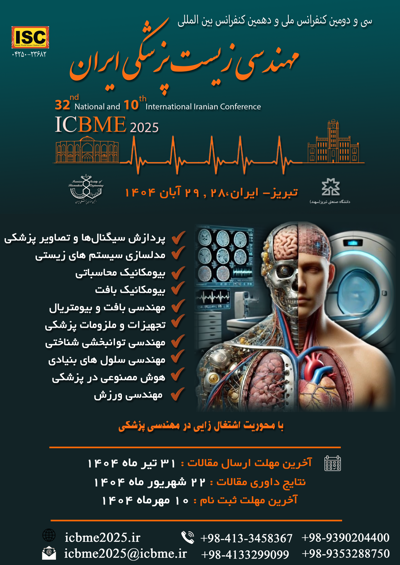
سی و دومین کنفرانس ملی و دهمین کنفرانس بین المللی مهندسی زیست پزشکی ایران
EEG-Based Classification of Schizophrenia and Healthy Controls Subjects Using Statistical and Nonlinear Features with Emphasis on Fuzzy Entropy
نویسندگان :
Mahdiyeh Tofighi Milani
1
Sina Shamekhi
2
Asghar Zarei
3
1- دانشگاه صنعتی تبریز(سهند)
2- دانشگاه صنعتی تبریز(سهند)
3- دانشگاه صنعتی تبریز(سهند)
کلمات کلیدی :
Schizophrenia،Electroencephalogram،Machine Learning،Fuzzy Entropy
چکیده :
Schizophrenia is a severe mental disorder that frequently causes the patient to have numerous problems with normal daily activities, and still, doctors struggle to accurately diagnose it in the early stages. Brain imaging and clinical tests, even if they are sometimes capable of achieving the goal, are often a lengthy procedure, expensive, and can also be somewhat uncomfortable for patients. New scientific work seeks to come up with a less intrusive and cheaper method, which will include the use of the EEG signal and the ML algorithm in identifying abnormalities of the schizophrenic patients as compared with the healthy ones. At first, the Fast Fourier Transform (FFT) was used to decompose the EEG signal into multiple sub-bands of frequency, and it was decided to extract a set of features from each sub-band, where the features included the statistical and nonlinear features - kurtosis, skewness, Shannon entropy, fuzzy entropy, mobility, and complexity. Subsequently, the ReliefF algorithm was utilized for the selection of features, and the significant features thus extracted were used as input for a number of classifiers, including the k-nearest neighbors (KNN), linear support vector machine (SVM), and the random forest (RF), to name but a few. The functional capabilities of the designed system were verified on a genuine EEG dataset that contains recorded signals from teenage schizophrenia patients as well as from healthy subjects. Random forest was identified as the most effective one among the various implemented classifiers, as it achieved the highest performance with an average accuracy of 97.69%. Also, fuzzy entropy was identified to be a constantly discriminative feature, implying it could serve as a sound biomarker for the differentiation of schizophrenia from healthy subjects by utilizing EEG signals.
لیست مقالات
لیست مقالات بایگانی شده
کاربردهای هوش مصنوعی و یادگیری عمیق در تشخیص و پیشبینی بیماریها
علی فرزین
تاثیر راهبری شرکتی بر اعتماد سرمایه گذاران با تاکید بر تداوم فعالیت و گزارشگری شرکتی
ایوب سبحانی - افشین شالچی
Analysis of Blood Report Images Using General-Purpose Vision-Language Models
Nadia Bakhsheshi - Hamid Beigy
Accurate Brain Vessel Segmentation in T1-Weighted MRI based on UNETR: Improving Neurosurgical Planning
Fatemeh Gholizadeh - Mahdiyeh Rahmani - Ahmad Pour-Rashidi - Ebrahim Najafzadeh - Parastoo Farnia - Alireza Ahmadian
بهینهسازی تنظیمات کاساندرا برای بهرهوری بیشتر در یادگیری ماشین
فاطمه قرشی پور - عباس میرزائی ثمرین - بابک نوری مقدم
تاثیر سوء گیری مالی بر قابلیت مقایسه اطلاعات مالی با تاکید بر کیفیت حسابرسی
ابراهیم نویدی عباسپور - صالح بهروز گجین
Deep Neural Network–Based Adaptive Global Logarithmic Sliding Mode Control for Lower-Limb Rehabilitation Exoskeletons
Masoud Shirzadeh - Ghoncheh Zand - Samim Kamyab
Finite Element Analysis of Polyoxymethylene Hemostatic Clips: Stress Distribution and Hinge Geometry Optimization
Parastoo Kamali - Hadi Taghizadeh
تبیین روابط بین استراتژی رقابتی ، توانمندی های بازاریابی و عملکرد سرمایهگذاری صادراتی با تکیه بر دیدگاه مبتنی بر منابع با استفاده از هوش مصنوعی
حسین بوذری
تأثیر تنوع در ترکیب اعضای هیئت مدیره بر کارایی سرمایه گذاری
محسن بزرگی
بیشتر
19 اردیبهشت 1405
راهنمای انتخاب کنفرانس معتبر برای چاپ مقاله علمی
19 اردیبهشت 1405
چرا شرکت در کنفرانسهای علمی برای مصاحبه دکتری اهمیت دارد؟
21 اردیبهشت 1405
پذیرش سریع مقاله در کنفرانسهای علمی مهندسی و فناوری آغاز شد
21 اردیبهشت 1405
آغاز ثبتنام در همایشهای بینالمللی مدیریت و حسابداری
ثمین همایش، سامانه مدیریت کنفرانس ها و جشنواره ها - نگارش 44.7.0