لطفا منتظر بمانید ...
0% Complete
English
☰
صفحه اصلی
کنفرانسهای فعال
مدیریت منابع انسانی پایدار
حسابداری
بازاریابی و برندینگ در عصر هوش مصنوعی
هوش مصنوعی:نوآوری، کسبوکار و آموزش
ارشیو کنفرانسها
اولین کنفرانس ملی هوش مصنوعی
دومین کنفرانس ملی هوش مصنوعی
اولین کنگره ملی حسابداری، مالی و مالیاتی
32کنفرانس بین المللی زیست پزشکی
راهنمای شرکت
نحوه ثبتنام
ثبت نام مدیریت منابع انسانی پایدار
ثبت نام دومین کنگره ملی حسابداری
ثبت نام سومین کنفرانس ملی هوش مصنوعی
ثیت نام بازاریابی و برندینگ در عصر هوش مصنوعی
ثبت نام زنجیره ارزش نفت گاز و پتروشیمی
ارسال مقاله
فرمت مقالات مدیریت منابع انسانی پایدار
فرمت مقالات سیستم های هوشمند حسابداری
فرمت مقالات ملی بازاریابی و برندینگ در عصر هوش مصنوعی
فرمت مقالات سومین کنفرانس هوش مصنوعی
سوالات متداول
اخبار و رویدادها
درباره ما
تماس با ما
صفحه اصلی
/
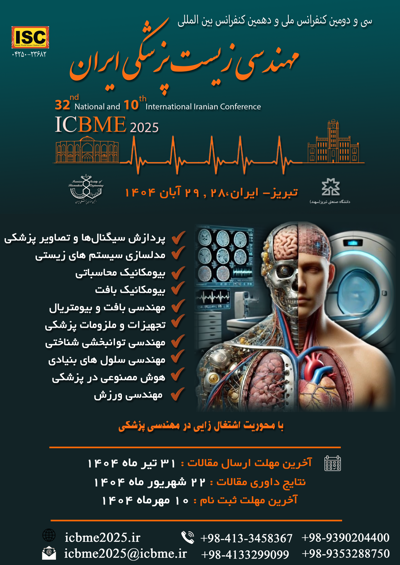
سی و دومین کنفرانس ملی و دهمین کنفرانس بین المللی مهندسی زیست پزشکی ایران
Leveraging Normal White Matter Hyperintensity Context for Enhanced Pathological Segmentation via Multi-Class Deep Learning
نویسندگان :
Mahdi Bashiri Bawil
1
Mousa Shamsi
2
Ali Fahmi Jafargholkhanloo
3
Abolhassan Shakeri Bavil
4
1- Tabriz University of Technology (Sahand)
2- Tabriz University of Technology (Sahand)
3- University of Mohaghegh Ardabili
4- Department of Radiology, Imam Reza Hospital Tabriz University of Medical Sciences Tabriz, Iran
کلمات کلیدی :
White matter hyperintensities (WMH)،deep learning،medical image segmentation،FLAIR MRI،multi-class classification،U-Net،pathological segmentation،neuroimaging
چکیده :
White matter hyperintensities (WMHs) on FLAIR MRI are critical indicators of cerebrovascular dysfunction associated with elevated risks of stroke, dementia, and death. Current automated segmentation methods suffer from false positive detection in periventricular regions, failing to distinguish normal or aging-related hyperintensities from pathologically significant lesions, which reduces clinical applicability and diagnostic accuracy. This study investigates whether training deep learning models to explicitly differentiate between normal and abnormal WMH improves pathological WMH segmentation performance compared to traditional binary approaches. Four state-of-the-art architectures (U-Net, Attention U-Net, DeepLabV3Plus, Trans-U-Net) were evaluated across two training scenarios using 1,974 FLAIR images from 100 MS patients with expert-annotated ground truths. Scenario 1 employed binary training (background vs abnormal WMH), while Scenario 2 utilized three-class training (background, normal WMH, abnormal WMH). Statistical analysis included paired t-tests and Cohen's d effect size calculations. U-Net achieved the most substantial improvement in Scenario 2 with 55.6% increase in Dice coefficient (0.693 vs 0.443) and 131% precision enhancement (p < 0.0001, Cohen's d = 0.971). Traditional CNN-based architectures demonstrated larger effect sizes than transformer-based models. The three-class training approach significantly enhances pathological WMH segmentation while maintaining clinical feasibility, providing a validated framework for improving automated neuroimaging tools' diagnostic utility.
لیست مقالات
لیست مقالات بایگانی شده
Emotion Recognition from EEG signal using GA-FLANN with Whale Optimization Algorithm
Mohammadamir Razmi - Pouya Faridfar - Seyed Amirreza Navali Hosseini alavi
Enhancing Type 2 Diabetes Diagnosis with Evolutionary Algorithms and Machine Learning
Parisa Rezaei - Mohsen Saffar - Hamid Reza Naji - Mohammad Mehdi Faghih - Rasoul Nouriazar
مطالعه ای بر نقش نوآوری و روش های فناوری اطلاعات (بلاک چین، اینترنت اشیا، حسابداری ابری، کلان داده) در کیفیت سیستم های اطلاعات حسابداری
فاطمه سپهوند - محمود همت فر
تأثیر هوش مصنوعی بر طراحی ارگونومیک محیط کار: بررسی الگوریتمهای یادگیری ماشین و ایمنی تولید فولاد
معراج جلیلی - پوریا علیمرادی - فرید نصیریان
طراحی ربات نرم پوشیدنی مچ پا با کنترل پیشبین مدل برای توانبخشی پس از سکته
امیرحسین اختراعی طوسی - یگانه خراشادی زاده
تاثیر قابلیت صورتهای مالی بر مالی سازی شرکت
ابراهیم نویدی عباسپور - محمد احسانی
جایگاه هوش مصنوعی در آینده اقتصاد ایران
سید کمال صادقی - فاطمه نمازی - هانیه پور مهدی
بررسی رابطه بین عدم تقارن اطلاعاتی و هزینه حقوق صاحبان سهام با فراوانی گزارشگری مالی
رعنا شهدآور - سولماز سعیدیان - رعنا پورفرج
Postural Responses to Mediolateral Perturbations: Contributions of Surface, Vision, and Cognitive Load
Haniyeh Zahra Budaqi - Ali Mojibi - Saeed Behzadipour
Optimization of an Integrated Filter Photometric system and a Centrifugal Microfluidic System for Biochemical Analysis
Bahareh Mohammadi Jobani - Amin Dehghan - Zahra Shahsavari - Esmail Pishbin
بیشتر
19 اردیبهشت 1405
راهنمای انتخاب کنفرانس معتبر برای چاپ مقاله علمی
19 اردیبهشت 1405
چرا شرکت در کنفرانسهای علمی برای مصاحبه دکتری اهمیت دارد؟
21 اردیبهشت 1405
پذیرش سریع مقاله در کنفرانسهای علمی مهندسی و فناوری آغاز شد
21 اردیبهشت 1405
آغاز ثبتنام در همایشهای بینالمللی مدیریت و حسابداری
ثمین همایش، سامانه مدیریت کنفرانس ها و جشنواره ها - نگارش 44.7.0