لطفا منتظر بمانید ...
0% Complete
English
☰
صفحه اصلی
کنفرانسهای فعال
مدیریت منابع انسانی پایدار
حسابداری
بازاریابی و برندینگ در عصر هوش مصنوعی
هوش مصنوعی:نوآوری، کسبوکار و آموزش
ارشیو کنفرانسها
اولین کنفرانس ملی هوش مصنوعی
دومین کنفرانس ملی هوش مصنوعی
اولین کنگره ملی حسابداری، مالی و مالیاتی
32کنفرانس بین المللی زیست پزشکی
راهنمای شرکت
نحوه ثبتنام
ثبت نام مدیریت منابع انسانی پایدار
ثبت نام دومین کنگره ملی حسابداری
ثبت نام سومین کنفرانس ملی هوش مصنوعی
ثیت نام بازاریابی و برندینگ در عصر هوش مصنوعی
ثبت نام زنجیره ارزش نفت گاز و پتروشیمی
ارسال مقاله
فرمت مقالات مدیریت منابع انسانی پایدار
فرمت مقالات سیستم های هوشمند حسابداری
فرمت مقالات ملی بازاریابی و برندینگ در عصر هوش مصنوعی
فرمت مقالات سومین کنفرانس هوش مصنوعی
سوالات متداول
اخبار و رویدادها
درباره ما
تماس با ما
صفحه اصلی
/
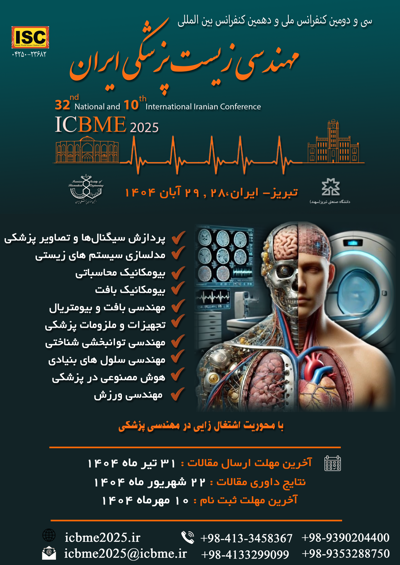
سی و دومین کنفرانس ملی و دهمین کنفرانس بین المللی مهندسی زیست پزشکی ایران
Finite Element Analysis of Ankle-Foot Orthosis (AFO): Influence of Shell and Insole Thickness Across Material Variants
نویسندگان :
Maryam Sheikhi
1
َAisan Rafiei
2
Nima Jamshidi
3
1- University of Isfahan
2- Iran University of Science and Technology
3- University of Isfahan
کلمات کلیدی :
Ankle-Foot Orthosis،Finite Element Analysis،Shell Thickness،Material Properties،Orthotic Biomechanics
چکیده :
Ankle-Foot Orthoses (AFOs) are essential biomechanical devices designed to enhance gait stability, reduce excessive limb movement, and redistribute load during rehabilitation for individuals with lower limb impairments. To achieve optimal AFO performance, a precise anatomical fit, lightweight construction that does not compromise functionality, mechanical robustness under multi-axial loading, reduced skin pressure, and enhanced user comfort are all required. This study aimed to develop biomechanically optimized, patient-specific AFOs using advanced technologies such as 3D scanning, additive manufacturing, and topology optimization. A finite element analysis (FEA)-based approach was employed to evaluate the effects of orthotic geometry, material properties, shell and insole thickness, and stiffness under dynamic physiological loading conditions. Four geometric configurations were simulated using patient-specific 3D models, varying shell thicknesses (3 mm and 6 mm) and insole thicknesses (6 mm and 9 mm). Two commonly used materials—polylactic acid (PLA) and polypropylene (PP)—were assessed under a vertical load of 350 N to analyze stress distribution, deformation, and plantar pressure. The results demonstrated that both geometry and material selection significantly influence mechanical performance, including displacement, Von Mises stress, and contact pressure. Thicker shell-insole combinations improved load-bearing capacity, while PP exhibited lower stress concentrations compared to PLA. This integrative simulation framework supports the quantitative evaluation of AFO designs and provides clinically relevant insights for personalized orthotic development and optimization.
لیست مقالات
لیست مقالات بایگانی شده
ساخت ومشخصه یابی هیدروژل بر پایه ژلاتین/صمغ عربی حاوی مقادیر مختلف آگارز به منظور کاربرد در ترمیم زخم
زهرا قاسمی - مهشید خرازیها
تحول بازاریابی در عصر دیجیتال: نقش کلیدی هوش مصنوعی
علی اکبر شهری مجارشین - علی میرطاهری
A Review of Large Language Models in Medicine: Applications, Challenges, and Future Directions
Elham Shameli - Seyed Mohsen Mirhosseini
Effects of Athletic Status on Plantar Pressure Distribution and Biomechanical Foot Health in Children and Adolescents
Amin Partovi fard - Mahmoodreza Azghani - Sadra Jalalli - Elham Hazrati - Samin Asghari
A Comprehensive Architecture for Smart Hospitals: Leveraging IoT, AI, and Data Science
Jafar Abdollahi - Laya Mahmoudi - Babak Nouri-Moghaddam
کاربرد هوش مصنوعی در بهینه سازی تولید و کاهش هدر رفت منابع
مریم مژده
همآوایی در شبکهای جهانکوچک و متشکل از نورونهای ممریستوری
محمدمهدی شیرزاد - مهتاب مهراب بیک - سجاد جعفری
بررسی ابزارهای حسابداری در بازار ارزهای دیجیتال و شبکه بلاکچین
میلاد هاشم زاده
Mitigating MRI Domain Shift in Sex Classification: A Deep Learning Approach with ComBat Harmonization
Peyman Sharifian - Mohammad Saber Azimi - Masoud Noroozi - Alireza Karimian - Hossein Arabi
Predictive Modeling of Astronaut Skin Microbiome Changes Using Machine Learning on NASA Multi-Omics Data
Mahdi Ansari - Abolfazl Hajihashemi - Mohammad Rafienia
بیشتر
19 اردیبهشت 1405
راهنمای انتخاب کنفرانس معتبر برای چاپ مقاله علمی
19 اردیبهشت 1405
چرا شرکت در کنفرانسهای علمی برای مصاحبه دکتری اهمیت دارد؟
21 اردیبهشت 1405
پذیرش سریع مقاله در کنفرانسهای علمی مهندسی و فناوری آغاز شد
21 اردیبهشت 1405
آغاز ثبتنام در همایشهای بینالمللی مدیریت و حسابداری
ثمین همایش، سامانه مدیریت کنفرانس ها و جشنواره ها - نگارش 44.7.0