لطفا منتظر بمانید ...
0% Complete
English
☰
صفحه اصلی
کنفرانسهای فعال
مدیریت منابع انسانی پایدار
حسابداری
بازاریابی و برندینگ در عصر هوش مصنوعی
هوش مصنوعی:نوآوری، کسبوکار و آموزش
ارشیو کنفرانسها
اولین کنفرانس ملی هوش مصنوعی
دومین کنفرانس ملی هوش مصنوعی
اولین کنگره ملی حسابداری، مالی و مالیاتی
32کنفرانس بین المللی زیست پزشکی
راهنمای شرکت
نحوه ثبتنام
ثبت نام مدیریت منابع انسانی پایدار
ثبت نام دومین کنگره ملی حسابداری
ثبت نام سومین کنفرانس ملی هوش مصنوعی
ثیت نام بازاریابی و برندینگ در عصر هوش مصنوعی
ثبت نام زنجیره ارزش نفت گاز و پتروشیمی
ارسال مقاله
فرمت مقالات مدیریت منابع انسانی پایدار
فرمت مقالات سیستم های هوشمند حسابداری
فرمت مقالات ملی بازاریابی و برندینگ در عصر هوش مصنوعی
فرمت مقالات سومین کنفرانس هوش مصنوعی
سوالات متداول
اخبار و رویدادها
درباره ما
تماس با ما
صفحه اصلی
/
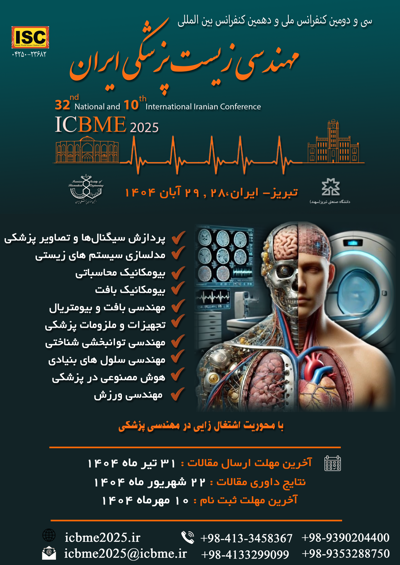
سی و دومین کنفرانس ملی و دهمین کنفرانس بین المللی مهندسی زیست پزشکی ایران
Predicting Sleep Efficiency and Apnea Index Using ECG-Derived and Sleep Quality Features: A Machine Learning Approach
نویسندگان :
Mahla Khodaverdi
1
Raheleh Davoodi
2
1- دانشگاه شهید بهشتی تهران
2- دانشگاه شهید بهشتی تهران
کلمات کلیدی :
Sleep efficiency،Apnea index،ECG،Machine learning،Feature selection
چکیده :
Sleep quality and obstructive sleep apnea profoundly influence cardiovascular function, cognition, and overall well-being, yet conventional monitoring approaches remain largely invasive or cumbersome, underscoring the imperative for streamlined, non-invasive alternatives. Herein, we present a machine learning framework that synergistically integrates electrocardiogram (ECG)-derived features with sleep quality metrics to forecast sleep efficiency and apnea-hypopnea index (AHI). Drawing upon the ECSMP (A Dataset on Emotion, Cognition, Sleep, and Multi-Modal Physiological Signals) dataset—encompassing recordings from 89 healthy participants—we curated a subset of 33 subjects whose data exhibited complete and unimpaired capture across all ECG-sleep modalities, thereby ensuring analytical fidelity; incomplete records from the remaining participants, attributable to recording artifacts or procedural inconsistencies, were judiciously excluded to uphold data integrity. From these selected recordings, 22 ECG-derived and sleep quality features were extracted and subsequently refined through recursive feature elimination (RFE) to mitigate redundancy and enhance predictive salience. We evaluated three regression models—Ridge Regression, Random Forest, and Gradient Boosting—employing subject-based 5-fold cross-validation to foster generalizability across individuals. For sleep efficiency, Ridge Regression attained a mean R² of 0.8734, indicating a high degree of explained variance; by comparison, Random Forest registered an R² of 0.2756 for AHI, which underscores the formidable obstacles in modeling sporadic apnea episodes amid constrained empirical resources. Feature importance scrutiny further illuminated wake hours and deep sleep ratio as preeminent correlates for sleep efficiency, complemented by deep sleep ratio and QRS amplitude for AHI. Collectively, this framework lays a promising foundation for non-invasive, individualized sleep monitoring, offering reliable estimates of sleep efficiency and preliminary insights into apnea patterns, albeit within the constraints of a modest sample size.
لیست مقالات
لیست مقالات بایگانی شده
بررسی تأثیر ریسک اطلاعات مالی و بندهای تعدیلی حسابرسی بر وجوه هیئتمدیره مشترک در شرکتهای پذیرفته شده در بورس اوراق بهادار تهران
حمیدرضا عزیزی - عرفان تخستین حلم
آمایش گردشگری مناطق ایران و هوش مصنوعی
محمدعلی فیض پور - مهدیه پیروی
Edge-Based Personalized Information Retrieval for Mobile Users Leveraging Federated Learning
Ebrahim Ebrahimi - Hamed Nazarian - Amin Mohammadi - Morteza Mohammadi zanjireh
بازسازی و تحلیل سیگنال ECG از نسخههای چاپی نوار قلب بهمنظور طبقهبندی خودکار بیماریهای ایسکمیک قلب با استفاده از شبکههای عصبی کانولوشنی
فاطمه کیخا - مهدیه قاسمی - سید مهدی صالحی
محاسبات کوانتومی در عمل: از تئوری تا پیادهسازی تجاری
محمد عادلی نیا
کاربرد هوش مصنوعی در ایجاد شبکه های صنعتی تولیدکنندگان قطعات خودرو
بهاره رضاپور - حسین بوداقی خواجه نوبر
نقش علم داده در مهندسی راه و ترابری
حمیدرضا ربانینژاد
افزایش تاب آوری سایبری با تلفیق بلاکچین و هوش مصنوعی: به کارگیری قراردادهای هوشمند جهت جلوگیری از تغییر سطح دسترسی مهاجم در حملات APT
شهرام حاج غنی - فرزانه عبدالرحیمی - زهره ابوالهادی
بهبود طبقه بندی احساسات نظرات مشتریان آمازون با جنگل تصادفی
فائزه مختارآبادی - وحید خطیبی بردسیری
مدلسازی عددی اندرکنش آکوستیک - سیال برای بهبود کیفیت اختلاط در میکروکانال سامانههای زیستی
رسول عدلی بیله سوار - فرهاد صادق مغانلو - محمد وجدی حکم آباد
بیشتر
19 اردیبهشت 1405
راهنمای انتخاب کنفرانس معتبر برای چاپ مقاله علمی
19 اردیبهشت 1405
چرا شرکت در کنفرانسهای علمی برای مصاحبه دکتری اهمیت دارد؟
21 اردیبهشت 1405
پذیرش سریع مقاله در کنفرانسهای علمی مهندسی و فناوری آغاز شد
21 اردیبهشت 1405
آغاز ثبتنام در همایشهای بینالمللی مدیریت و حسابداری
ثمین همایش، سامانه مدیریت کنفرانس ها و جشنواره ها - نگارش 44.7.0