لطفا منتظر بمانید ...
0% Complete
English
☰
صفحه اصلی
کنفرانسهای فعال
مدیریت منابع انسانی پایدار
حسابداری
بازاریابی و برندینگ در عصر هوش مصنوعی
هوش مصنوعی:نوآوری، کسبوکار و آموزش
ارشیو کنفرانسها
اولین کنفرانس ملی هوش مصنوعی
دومین کنفرانس ملی هوش مصنوعی
اولین کنگره ملی حسابداری، مالی و مالیاتی
32کنفرانس بین المللی زیست پزشکی
راهنمای شرکت
نحوه ثبتنام
ثبت نام مدیریت منابع انسانی پایدار
ثبت نام دومین کنگره ملی حسابداری
ثبت نام سومین کنفرانس ملی هوش مصنوعی
ثیت نام بازاریابی و برندینگ در عصر هوش مصنوعی
ثبت نام زنجیره ارزش نفت گاز و پتروشیمی
ارسال مقاله
فرمت مقالات مدیریت منابع انسانی پایدار
فرمت مقالات سیستم های هوشمند حسابداری
فرمت مقالات ملی بازاریابی و برندینگ در عصر هوش مصنوعی
فرمت مقالات سومین کنفرانس هوش مصنوعی
سوالات متداول
اخبار و رویدادها
درباره ما
تماس با ما
صفحه اصلی
/
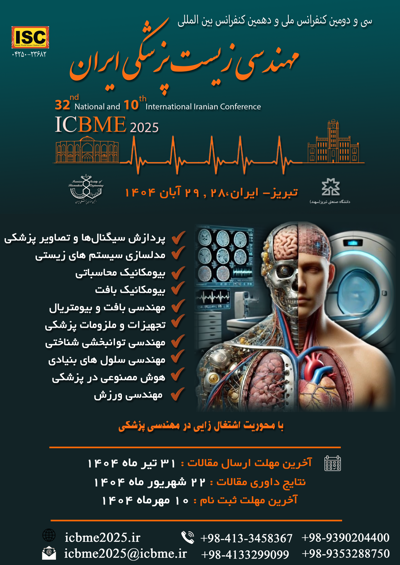
سی و دومین کنفرانس ملی و دهمین کنفرانس بین المللی مهندسی زیست پزشکی ایران
Parkinson’s Disease Classification Using EEG and a Hybrid EEGNet–LSTM Architecture
نویسندگان :
Pouya Taghipour Langrodi
1
Amirsadra Khodadadi
2
Ali Sadat Modaresi
3
Mohammad Ahadzadeh
4
Mostafa Rostami
5
Sadegh Madadi
6
1- Professor, Department of Mechanical Engineering, Amirkabir University of Technology (Tehran Polytechnic)
2- Professor, Department of Mechanical Engineering, Amirkabir University of Technology (Tehran Polytechnic)
3- Professor, Department of Mechanical Engineering, Amirkabir University of Technology (Tehran Polytechnic)
4- Professor, Department of Mechanical Engineering, Amirkabir University of Technology (Tehran Polytechnic)
5- Professor, Department of Mechanical Engineering, Amirkabir University of Technology (Tehran Polytechnic)
6- Professor, Department of Mechanical Engineering, Amirkabir University of Technology (Tehran Polytechnic)
کلمات کلیدی :
Parkinson’s Disease،Electroencephalography،Machine Learning،Simon Conflict،Deep Neural Networks
چکیده :
Parkinson's disease (PD) is a common progressive neurodegenerative disorder that causes motor problems and cognitive-control problems that slowly get worse over time. These problems often show up years before a clinical diagnosis. To meet the need for objective early biomarkers, high-density electroencephalography (EEG) was recorded from 56 subjects (28 PD patients and 28 controls) while they did the Simon Conflict Task 200 times. This task tests how well people can stop themselves from responding when the conditions are the same or different. After a few preprocessing steps, which included 0.1–40 Hz band-pass filtering, common-average re-referencing, and independent component analysis (ICA) with ICLabel-guided artifact rejection, one-second epochs that were time-locked to the start of the stimulus were taken out. We then created a hybrid deep-learning framework that combined EEGNet for spatial feature extraction across 64 channels with three stacked bidirectional Long Short-Term Memory (LSTM) layers to capture temporal dynamics. Three shallow supervised models were used to classify the 64-dimensional spatiotemporal representations for each epoch: support vector machine (SVM), k-nearest neighbors (kNN), and an ensemble of SVM and Naïve Bayes. SVM did the best, with 89.7% accuracy, 91.8% sensitivity, and 85.0% specificity. This was a 5–10% improvement over traditional handcrafted-feature classifiers (p < 0.01). These results show that end-to-end spatial-temporal feature learning from task-evoked EEG is a powerful, non-invasive way to accurately separate Parkinson’s patients and the control group.
لیست مقالات
لیست مقالات بایگانی شده
Corrective Insoles Enhance Center of Mass Stability During Stair Descent in Individuals with Leg Length Discrepancy
Kasra Alborzi - Alireza Hashemi Oskouei - Pouya Mansouri - Seyed Mehran Ayati Najafabadi
تشخیص بیماری MS با استفاده از EfficientNet-B0 و CycleGAN بر پایه نقشههای ضخامت شبکیه
محبوبه سبزه یان - مریم سبزه یان - ماندانا سادات غفوریان - امین نوری
نقش یادگیری عمیق در توسعه هوش مصنوعی و کاربردهای آن در صنعت، تجارت و زنجیره تأمین
آیدا مهرنیا
کاربردهای هوش مصنوعی و یادگیری عمیق در تشخیص و پیشبینی بیماریها
علی فرزین
رویکردهای مبتنی بر هوش مصنوعی برای تشخیص تقلب مالی
مهدیه نامی بسیط - شبنم بالازاده قره باغی - مهدی نامی بسیط
کاربرد بیومکانیک و آنالیز راهرفتن در بهینهسازی درمان کودکان مبتلا به فلج مغزی: مرور ادبیات
علی جعفری - علیرضا هاشمی اسکویی - شقایق حسن زاده خانمیری
بهبود تخمین ضربان قلب در دستگاههای پوشیدنی تجاری با استفاده از فیلتر کالمن و مدلهای رگرسیون
میلاد رضایی ارجمند - تانیا حسین خانی - امیرحسین تجرد - علیرضا طالش جفادیده - اصغر زارعی
Implementation of Anisotropic Hyperelastic Materials in NL-SBFEM Framework: The HGO Model
Seyed Sadjad Abedi-Shahri - Farzan Ghalichi - Iman Zoljanahi Oscui
In silico Evaluation of a High-Porosity Titanium Scaffold in a Bioreactor for Bone Tissue Engineering Applications: A Fluid Transport Study
Elnaz Khorasani - Setareh Garazhian - Bahman Vahidi
Analysis of Blood Report Images Using General-Purpose Vision-Language Models
Nadia Bakhsheshi - Hamid Beigy
بیشتر
19 اردیبهشت 1405
راهنمای انتخاب کنفرانس معتبر برای چاپ مقاله علمی
19 اردیبهشت 1405
چرا شرکت در کنفرانسهای علمی برای مصاحبه دکتری اهمیت دارد؟
21 اردیبهشت 1405
پذیرش سریع مقاله در کنفرانسهای علمی مهندسی و فناوری آغاز شد
21 اردیبهشت 1405
آغاز ثبتنام در همایشهای بینالمللی مدیریت و حسابداری
ثمین همایش، سامانه مدیریت کنفرانس ها و جشنواره ها - نگارش 44.7.0