لطفا منتظر بمانید ...
0% Complete
English
☰
صفحه اصلی
کنفرانسهای فعال
مدیریت منابع انسانی پایدار
حسابداری
بازاریابی و برندینگ در عصر هوش مصنوعی
هوش مصنوعی:نوآوری، کسبوکار و آموزش
ارشیو کنفرانسها
اولین کنفرانس ملی هوش مصنوعی
دومین کنفرانس ملی هوش مصنوعی
اولین کنگره ملی حسابداری، مالی و مالیاتی
32کنفرانس بین المللی زیست پزشکی
راهنمای شرکت
نحوه ثبتنام
ثبت نام مدیریت منابع انسانی پایدار
ثبت نام دومین کنگره ملی حسابداری
ثبت نام سومین کنفرانس ملی هوش مصنوعی
ثیت نام بازاریابی و برندینگ در عصر هوش مصنوعی
ثبت نام زنجیره ارزش نفت گاز و پتروشیمی
ارسال مقاله
فرمت مقالات مدیریت منابع انسانی پایدار
فرمت مقالات سیستم های هوشمند حسابداری
فرمت مقالات ملی بازاریابی و برندینگ در عصر هوش مصنوعی
فرمت مقالات سومین کنفرانس هوش مصنوعی
سوالات متداول
اخبار و رویدادها
درباره ما
تماس با ما
صفحه اصلی
/
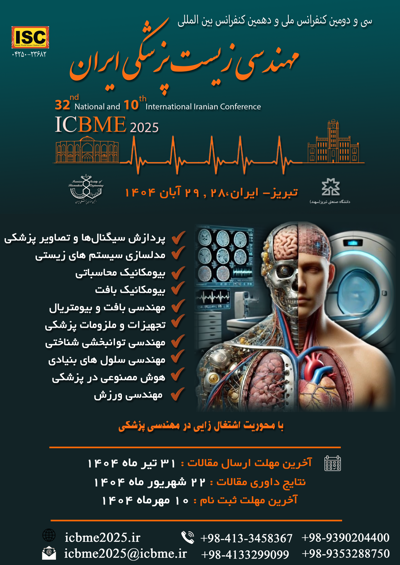
سی و دومین کنفرانس ملی و دهمین کنفرانس بین المللی مهندسی زیست پزشکی ایران
Ultimate Failure Load of Plate-Based Fixation and a Suture Anchor for Rotator Cuff Repair Across Polyurethane Bone Densities
نویسندگان :
Parviz Ahangar
1
Solmaz Mojadam Mofrad
2
Amir Nourani
3
Amirhasan Amini
4
Erfan Ahmadpour Joeini
5
Mohammad nasir Naderi
6
1- کلینیک شمس تبریزی
2- دانشگاه صنعتی شریف
3- دانشگاه صنعتی شریف
4- دانشگاه صنعتی شریف
5- دانشگاه صنعتی شریف
6- بیمارستان کسری
کلمات کلیدی :
Rotator cuff repair،Suture anchor،Plate-based fixation،Synthetic cancellous bone،Ultimate failure load
چکیده :
Abstract—Background— Early after rotator cuff repair, the tendon–bone interface is weak; robust time-zero fixation is therefore required to resist oblique loading. Objective— To evaluate the time-zero fixation strength of a plate-based approach versus a commercial suture anchor across synthetic cancellous bone densities. Methods— Twenty-four tests (four for each combination of method and density) were performed on rigid polyurethane foam blocks with densities of 10, 12, and 15 pcf according to ASTM F1839. The investigational plate-based fixation (AP) and a 4-mm suture anchor (SA) were set up on a custom fixture and pulled to failure at an oblique angle of one hundred twenty degrees under displacement control at one millimeter per second. The primary outcome was the ultimate failure load, defined as the first peak followed by an abrupt drop in load. Independent t-tests were used to compare methods within each density. Results— Mean ultimate failure load for SA was 160 N at 10 pcf, 225 N at 12 pcf, and 400 N at 15 pcf. Mean ultimate failure load for AP was 392 N at 10 pcf, 449 N at 12 pcf, and 455 N at 15 pcf. AP exceeded SA within each density (10 pcf: p less than 0.0001; 12 pcf: p equal to 0.0003; 15 pcf: p equal to 0.0217). Within AP, increasing density from 10 to 12 pcf raised the mean ultimate failure load by about 56 N (p equal to 0.0240); increasing from 12 to 15 pcf did not produce a notable change (p equal to 0.7569). Failures were predominantly anchor pull-out for SA and tape rupture at plate holes for AP; surface indentation beneath the plate was most apparent at 10 pcf. Conclusion— Under a conservative oblique pull of one hundred twenty degrees, the plate-based method provided higher time-zero strength than a suture anchor across 10, 12, and 15 pcf, with the greatest margin at lower density. These density-resolved data may help guide fixation choice when bone quality is limited, pending confirmation under cyclic loading and in cadaveric and clinical studies.
لیست مقالات
لیست مقالات بایگانی شده
بهبود عملکرد سیستمهای شناسایی بدافزار با تلفیق شبکههای عصبی کانولوشن و الگوریتم جنگل تصادفی
بهزاد شاه پسندی - مجید مزینانی
رابطه سیاست پولی و ورشکستگی شرکت با فرار مالیاتی
صفیه سلیمان نژاد - امید پایدار خیابانی - احمد شاهی - محمد هاشم نژاد سراجه لو
کاربرد هوش مصنوعی در صنعت گردشگری ایران
سید عبدالحمید حسینی - نادیا السادات حسینی
پذیرش فناوری هوش مصنوعی در بین کارکنان واحدهای مالی و حسابداری در صنعت خدمات اشتراکی
زهرا اسمی - معصومه جعفری - فرهاد جباری متین
تاثیر استفاده از هوش مصنوعی بر تصمیمات مالی شرکتهای بیمه
مسعود سبزچی دهخوارقانی - میترا زابلی پیله رود
Application of Attention Mechanisms in Deep Learning Models for COVID-19 Detection and Classification from Medical Images: A Systematic Review
Jafar Abdollahi - Babak Nouri-Moghaddam - Abbas Mirzaei
Quantitative Mapping of Perivascular Spaces Across MRI Modalities Using Vesselness Filtering and Morphometric Analysis
Razieh Salesi - Hamid Soltanian-Zadeh
EEG-Based Classification of Schizophrenia and Healthy Controls Subjects Using Statistical and Nonlinear Features with Emphasis on Fuzzy Entropy
Mahdiyeh Tofighi Milani - Sina Shamekhi - Asghar Zarei
شناسایی و تفکیک خودکار ضایعات بیماری مولتیپل اسکلروزیس در MRI با استفاده از معماری بهینه شده U-NET
مریم فتحعلی زاده اصل سرکندی - علی پورقاسم
Predicting Sleep Efficiency and Apnea Index Using ECG-Derived and Sleep Quality Features: A Machine Learning Approach
Mahla Khodaverdi - Raheleh Davoodi
بیشتر
19 اردیبهشت 1405
راهنمای انتخاب کنفرانس معتبر برای چاپ مقاله علمی
19 اردیبهشت 1405
چرا شرکت در کنفرانسهای علمی برای مصاحبه دکتری اهمیت دارد؟
21 اردیبهشت 1405
پذیرش سریع مقاله در کنفرانسهای علمی مهندسی و فناوری آغاز شد
21 اردیبهشت 1405
آغاز ثبتنام در همایشهای بینالمللی مدیریت و حسابداری
ثمین همایش، سامانه مدیریت کنفرانس ها و جشنواره ها - نگارش 44.7.0