لطفا منتظر بمانید ...
0% Complete
English
☰
صفحه اصلی
کنفرانسهای فعال
مدیریت منابع انسانی پایدار
حسابداری
بازاریابی و برندینگ در عصر هوش مصنوعی
هوش مصنوعی:نوآوری، کسبوکار و آموزش
ارشیو کنفرانسها
اولین کنفرانس ملی هوش مصنوعی
دومین کنفرانس ملی هوش مصنوعی
اولین کنگره ملی حسابداری، مالی و مالیاتی
32کنفرانس بین المللی زیست پزشکی
راهنمای شرکت
نحوه ثبتنام
ثبت نام مدیریت منابع انسانی پایدار
ثبت نام دومین کنگره ملی حسابداری
ثبت نام سومین کنفرانس ملی هوش مصنوعی
ثیت نام بازاریابی و برندینگ در عصر هوش مصنوعی
ثبت نام زنجیره ارزش نفت گاز و پتروشیمی
ارسال مقاله
فرمت مقالات مدیریت منابع انسانی پایدار
فرمت مقالات سیستم های هوشمند حسابداری
فرمت مقالات ملی بازاریابی و برندینگ در عصر هوش مصنوعی
فرمت مقالات سومین کنفرانس هوش مصنوعی
سوالات متداول
اخبار و رویدادها
درباره ما
تماس با ما
صفحه اصلی
/
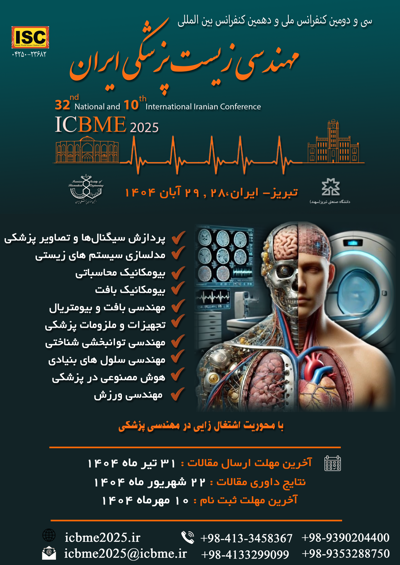
سی و دومین کنفرانس ملی و دهمین کنفرانس بین المللی مهندسی زیست پزشکی ایران
In silico Evaluation of a High-Porosity Titanium Scaffold in a Bioreactor for Bone Tissue Engineering Applications: A Fluid Transport Study
نویسندگان :
Elnaz Khorasani
1
Setareh Garazhian
2
Bahman Vahidi
3
1- دانشکدگان علوم و فناوریهای میان رشته ای دانشگاه تهران
2- دانشگاه تبریز
3- دانشکدگان علوم و فناوریهای میان رشته ای دانشگاه تهران
کلمات کلیدی :
Osseointegration،Scaffold Design،Porous Structures،CFD،FSI،Tissue Engineering
چکیده :
This study involves the design and testing of a titanium scaffold that had very high porosity, the aim of, being to determine whether it would be useful as a bone tissue engineering substrate. The structure is based on a modified body-centered cubic (BCC) unit cell with an added vertical strut to improve strength while preserving open space. The model was created in Rhinoceros® 3D and achieved a porosity of approximately 93.5%, which is considered very high for bone scaffolds. To understand how this design would behave, a fully coupled fluid–structure interaction (FSI) simulation was performed. The scaffold material was modeled as linearly elastic Ti6Al4V and the surrounding fluid as a Newtonian perfusion medium. The results showed very low internal stresses from the flowing fluid (peak von Mises stress ≈ 6.62 kPa) with al- most no deformation, confirming that the scaffold maintains its shape under typical perfusion conditions. The flow remained efficient and mostly laminar; the aver- age velocity was 1.41 mm/s, within the osteogenic range 0.16–1.66 mm/s, with local peaks up to 2.7 mm/s in channels aligned with the flow. Overall, the scaffold pro- posed here will have a mechanical integrity and will have an efficient nutrient transportation at the same time. Such combination makes it encouraging both in regard to im- plants and in regard to bioreactors intended to grow an extra tissue in vitro.
لیست مقالات
لیست مقالات بایگانی شده
Modeling Attention Performance Across Female Reproductive Aging Using Logistic Regression
Zahra Zehtabi - Leila Mehdizadeh Fanid - Pedram Salehpoor - Mahdi Jafari Asl
برنامه ریزی مالی به جای وحشت زدگی در بازارهای نوسانی
رویا باغ میرانی
ارتباط بین عملکرد پایداری و سرمایه گذاری بیشتر و کمتر از حد
سعید انور خطیبی - علی زارع بهتاشی
Postural Responses to Mediolateral Perturbations: Contributions of Surface, Vision, and Cognitive Load
Haniyeh Zahra Budaqi - Ali Mojibi - Saeed Behzadipour
آینده حرفه حسابرسی در پرتو هوش مصنوعی و تکنولوژی های نوین
مهدی مرادزاده فرد - غلامحسین دوانی - پروانه خالقی
نقش حسابداری مدیریت در استراتژی فرهنگ سازمانی و مالیاتی
علی نمازیان - حمیدرضا فیروزآبادی
تاثیر هوش مصنوعی بر عملکرد شرکت با میانجیگری چابکی مشتری و ظرفیت جذب و تعدیلگری چابکی سازمان شرکت عامر اندیش هوشمند
مریم مقرب صمدی
مقابله با عوامل ایجادکننده تقلب در صورتهای مالی (مرور سیستماتیک از ادبیات و تحلیل بیبلیومتریک)
شبنم بالازاده قره باغی - یونس حیدری - مریم یادگاری دیزناب - پرهام شاکری بهادر
طبقه بندی دقیق تومورهای مغزی با رویکرد ترکیبی EfficientNetB4 و ترنسفورمر بینایی
الهه الهی پرست باقری - افشین ابراهیمی
Carbon Nanotube Mediated Hyperthermia for Cancer Therapy
Behnam Zeinali - Afsaneh Mojra
بیشتر
19 اردیبهشت 1405
راهنمای انتخاب کنفرانس معتبر برای چاپ مقاله علمی
19 اردیبهشت 1405
چرا شرکت در کنفرانسهای علمی برای مصاحبه دکتری اهمیت دارد؟
21 اردیبهشت 1405
پذیرش سریع مقاله در کنفرانسهای علمی مهندسی و فناوری آغاز شد
21 اردیبهشت 1405
آغاز ثبتنام در همایشهای بینالمللی مدیریت و حسابداری
ثمین همایش، سامانه مدیریت کنفرانس ها و جشنواره ها - نگارش 44.7.0