لطفا منتظر بمانید ...
0% Complete
English
☰
صفحه اصلی
کنفرانسهای فعال
مدیریت منابع انسانی پایدار
حسابداری
بازاریابی و برندینگ در عصر هوش مصنوعی
هوش مصنوعی:نوآوری، کسبوکار و آموزش
ارشیو کنفرانسها
اولین کنفرانس ملی هوش مصنوعی
دومین کنفرانس ملی هوش مصنوعی
اولین کنگره ملی حسابداری، مالی و مالیاتی
32کنفرانس بین المللی زیست پزشکی
راهنمای شرکت
نحوه ثبتنام
ثبت نام مدیریت منابع انسانی پایدار
ثبت نام دومین کنگره ملی حسابداری
ثبت نام سومین کنفرانس ملی هوش مصنوعی
ثیت نام بازاریابی و برندینگ در عصر هوش مصنوعی
ثبت نام زنجیره ارزش نفت گاز و پتروشیمی
ارسال مقاله
فرمت مقالات مدیریت منابع انسانی پایدار
فرمت مقالات سیستم های هوشمند حسابداری
فرمت مقالات ملی بازاریابی و برندینگ در عصر هوش مصنوعی
فرمت مقالات سومین کنفرانس هوش مصنوعی
سوالات متداول
اخبار و رویدادها
درباره ما
تماس با ما
صفحه اصلی
/
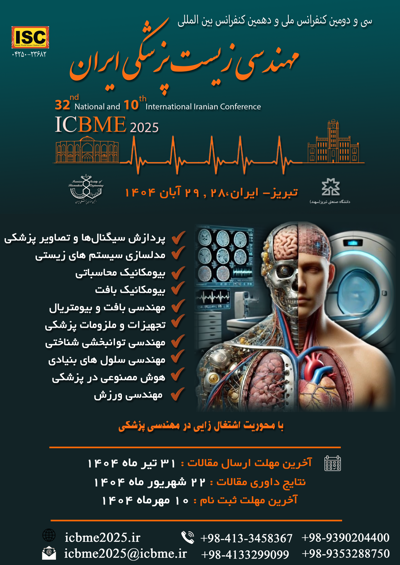
سی و دومین کنفرانس ملی و دهمین کنفرانس بین المللی مهندسی زیست پزشکی ایران
Excessive and Variable Center of Mass Motion Characterizes Gait Instability In Women with Obese Knee Osteoarthritis
نویسندگان :
Diba Chegini
1
Behzad Yasrebi
2
Siamak Haghipour
3
Farhad Farhad Tabatabai Ghomsheh
4
Aliakbar Pahlevanian
5
1- ازاد تبریز
2- ازاد تبریز
3- ازاد تبریز
4- دانشگاه علوم توانبخشی و سلامت اجتماعی
5- دانشگاه توانبخشی سمنان
کلمات کلیدی :
Gait Analysis،Knee Osteoarthritis،Obesity،Center of Mass،Postural Balance،Stability،Biomechanics
چکیده :
Abstract—Background: Elderly women with obese knee osteoarthritis (KOA) represent a population at high risk for impaired balance and falls. Quantifying the dynamic stability of their gait is crucial for understanding this risk and developing targeted interventions. Objective: This study aimed to compare gait stability and balance between healthy young women and elderly women with obese KOA through a comprehensive analysis of center of mass (COM) kinematics. Methods: Forty elderly women with obese KOA (70±4 yrs, 98.8±7.3 kg, 158.6±7.8 cm) and twenty healthy young women (29±5 yrs, 61.2±6.4 kg, 159.5±6.7 cm) underwent 3D gait analysis. A subject-specific OpenSim model was used to compute the COM trajectory for each participant. Key stability metrics—including path, range of motion (ROM), maximum displacement, standard deviation, and their velocity counterparts in the anteroposterior (AP), mediolateral (ML), and vertical (SI) directions—were calculated and normalized to body height. Results: The obese KOA group demonstrated significantly impaired stability across all COM metrics. Specifically, they exhibited a larger COM path, greater ROM, and increased maximum displacement (p<0.05), with the most pronounced differences observed in the ML direction. Furthermore, the obese KOA group showed significantly higher variability, evidenced by greater standard deviation of both COM position and velocity (p<0.05), indicating a less consistent and more unstable gait pattern. Conclusion: Elderly women with obese knee osteoarthritis walk with a gait pattern characterized by excessive and poorly controlled motion of the center of mass, particularly in the mediolateral direction. These objective biomechanical findings highlight a significant deficit in dynamic stability, which likely contributes to a heightened fall risk in this population. Rehabilitation strategies should focus on improving mediolateral balance control to mitigate this risk. Keywords-component; Gait Analysis; Knee Osteoarthritis; Obesity; Center of Mass; Postural Balance; Stability; Biomechanics
لیست مقالات
لیست مقالات بایگانی شده
هوشمندسازی زنجیره تأمین با بهرهگیری از الگوریتمهای هوش مصنوعی
غلامرضا جمالی - محمدهادی نامور
بررسی نقش فناوری هوش مصنوعی در فرآیند ایجاد مدل خدمات دستگاه خودپرداز
سجاد یوسفی - مریم پورنجف - آیدا محمدی - ساحل پرسته
Parkinson’s Disease Classification Using EEG and a Hybrid EEGNet–LSTM Architecture
Pouya Taghipour Langrodi - Amirsadra Khodadadi - Ali Sadat Modaresi - Mohammad Ahadzadeh - Mostafa Rostami - Sadegh Madadi
Evaluation of Mechanical and Biological Properties of PCL-coated Magnesium Scaffolds
Fatemeh Sharifabadi - Sayed Khatiboleslam Sadrnezhaad
Depression detection based on EEG signal analysis utilizing Inter-hemispheric Asymmetry and Correlation Dimension assessment
Amirreza Ahmadi - Saeid Yarmohammdi - Ali Zeraatkar - Reza Rostami
بهبود تخمین ضربان قلب در دستگاههای پوشیدنی تجاری با استفاده از فیلتر کالمن و مدلهای رگرسیون
میلاد رضایی ارجمند - تانیا حسین خانی - امیرحسین تجرد - علیرضا طالش جفادیده - اصغر زارعی
بازنگری الگوریتمهای کشف گرههای فعال در شبکههای اجتماعی
مجید عبدالرزاق نژاد - مهدی خرد - محمدامیر جمالی
بررسی تأثیر ابعاد سه گانه سرمایه فکری بر عملکرد مالی سازمان منطقه آزاد تجاری و صنعتی ماکو
فرشید میابی - المیرا گوهری بوکت
هوش مصنوعی و حاکمیت شرکتی
محمد ملکی
تحول دیجیتال، مسیر خوب یا بد: یک دستور کار تحقیقاتی چند سطحی
مهدی زینالی - رعنا شهدآور
بیشتر
19 اردیبهشت 1405
راهنمای انتخاب کنفرانس معتبر برای چاپ مقاله علمی
19 اردیبهشت 1405
چرا شرکت در کنفرانسهای علمی برای مصاحبه دکتری اهمیت دارد؟
21 اردیبهشت 1405
پذیرش سریع مقاله در کنفرانسهای علمی مهندسی و فناوری آغاز شد
21 اردیبهشت 1405
آغاز ثبتنام در همایشهای بینالمللی مدیریت و حسابداری
ثمین همایش، سامانه مدیریت کنفرانس ها و جشنواره ها - نگارش 44.7.0